Australia’s Multilingual Chatbots: 3 Paths to Context and Privacy
Compare three chatbot architectures, see how translation can lose context across turns, and assess OAIC privacy controls and onshore private cloud options.

Multilingual chatbots let organisations support customers in many languages automatically while preserving conversational context, and the architecture you choose (translation layer, native multilingual models, or a hybrid pipeline) determines how well that context survives. Done well, this means global reach, round-the-clock support, and measurable gains in satisfaction. The sections below walk through the technical approaches, a practical implementation checklist, and the privacy considerations you need before launch.
TL;DR:
- Translation layers deploy fastest and cost less to run, but they lose coherence across multiple turns without contextual inputs and training tailored to your industry.
- Native multilingual models usually preserve idiom and context better, but they require multilingual training data and continuing fine tuning to maintain quality across target languages.
- Test full conversations with human review and structured error analysis, because per turn scores can miss drift, contradictions, and discourse problems across exchanges.
- Disclose AI use, limit sensitive information collection, redact identifying details, and set retention limits; APP 3 and APP 5 govern collection and notice obligations.
- Pilot a hybrid pipeline in your two highest volume languages before building native models, then assess where context fails without retraining from scratch.
Table of Contents
- Business benefits and primary use cases
- Technical approaches: translation layer, native multilingual models and hybrid pipelines
- Practical implementation checklist for decision-makers
- Privacy, compliance and governance
- Practitioner patterns for enterprise-grade deployments
- Where to start if you’re weighing this up
- A privacy-first path to multilingual support
- FAQ
- Sources
Business benefits and primary use cases
Customers who get help in their own language tend to stay longer and buy again, which is why native-language support has become a commercial lever rather than a nice-to-have. A multilingual chatbot turns that preference into something you can scale without hiring a support team in every market.
The highest-value applications tend to cluster around a few patterns:
- Customer support: handling common queries, order status and troubleshooting in the customer’s preferred language, any time of day.
- Lead qualification: screening and routing inbound enquiries before a human sales rep gets involved.
- Bookings and scheduling: managing appointments or reservations across time zones and languages without back-and-forth emails.
- Collections and follow-ups: sending structured, compliant reminders in the language a customer has already used with you.
- Knowledge base localisation: surfacing help articles and policies in the reader’s language instead of forcing a translation step on them.
Rather than localising every language at once, prioritise by customer impact: start with the languages tied to your highest-volume or highest-value segments, then expand as you confirm quality holds up in production.
Technical approaches: translation layer, native multilingual models and hybrid pipelines
There are three broad ways to build multilingual conversational support, and each makes a different trade-off between speed of deployment and conversational quality.
A translation-layer approach sits machine translation between the user and a single-language agent or bot. It’s the fastest to stand up because you keep one core bot and translate in and out, but conversation-level translation still lags single-turn quality: the WMT 2024 Chat Translation Shared Task found that even strong systems lose coherence across multiple turns unless they use contextual inputs and in-domain fine-tuning.
Native multilingual models, built on large language models trained or fine-tuned across your target languages, tend to preserve idiom and context better because there’s no intermediate translation step to introduce drift. The trade-off is effort: you need multilingual training data and ongoing fine-tuning to keep quality consistent across languages.
Hybrid pipelines combine machine translation with intent classification and retrieval-augmented generation (RAG) or summarisation of prior turns, which keeps context manageable while still allowing a single underlying model to do the reasoning. This is increasingly the practical middle ground for teams that can’t fully retrain a model per language but need more than a bare translation layer. Our explanation of RAG for chatbots covers how retrieval keeps responses grounded in your own content rather than generic web text.
Operationally, each approach has different costs: translation layers are cheap to run but need monitoring for drift, native models need retraining cycles, and hybrid pipelines add latency from the extra processing steps. Budget for ongoing evaluation regardless of which path you pick.
- Translation layer: fastest to deploy, weakest on multi-turn coherence.
- Native multilingual models: strongest contextual fidelity, highest build effort.
- Hybrid pipelines: balanced cost and quality, added architectural complexity.
Pro Tip: Pilot with a hybrid pipeline on your two highest-volume languages before committing to a full native-model build; it reveals where context breaks down without the cost of retraining from scratch.
Practical implementation checklist for decision-makers
Launching a multilingual chatbot is less about picking a model and more about sequencing the decisions that protect quality once it’s live.
- Prioritise languages against customer volume and revenue impact, not just headcount convenience.
- Build language detection and routing, with clear fallback rules for when confidence is low or a language isn’t yet supported.
- Assemble training data: bilingual conversation sets, in-domain examples and synthetic augmentation where real data is thin.
- Integrate with existing systems: your CRM, knowledge base, and the channels customers already use, whether that’s web chat, voice, SMS or email.
- Test at both levels: turn-by-turn accuracy and full-conversation coherence, backed by human review rather than automated scoring alone.
- Set operational controls: PII redaction, data retention limits, ongoing monitoring and a retraining cadence as language use shifts.
Evaluation deserves particular attention here. The WMT 2024 findings note that conversation-level quality needs metrics beyond simple per-turn scoring, with human direct assessment and structured error analysis catching discourse problems that automatic scores miss.
Conversation-aware evaluation consistently reveals issues that per-turn testing hides. Teams that only check single responses in isolation tend to ship bots that drift or contradict themselves across a longer exchange, exactly the failure mode conversational MT research keeps surfacing.
For the security side of this checklist, our chatbot security playbook sets out a practical assessment sequence for Australian IT teams before go-live.
Privacy, compliance and governance
Public-facing chatbots sit squarely inside privacy obligations, and the OAIC’s guidance on commercially available AI products sets out what good practice looks like. It recommends organisations clearly disclose when customers are talking to an AI tool, minimise the collection of personal and sensitive information through that tool, update privacy notices accordingly, and put in place governance to meet Australian Privacy Principle obligations.
In practice, that guidance shapes some concrete architecture choices:
- Disclose the chatbot’s AI nature upfront rather than letting customers assume they’re speaking to a person.
- Avoid collecting sensitive personal information (health details, financial identifiers) through a public-facing bot unless it’s strictly necessary and properly secured.
- Pair any public LLM use with strict PII redaction and onshore data handling, particularly in regulated sectors.
- Review retention settings so chat logs aren’t kept longer than the purpose requires.
APP 3 (collection) and APP 5 (notification of collection) are the two principles most directly engaged by chatbot interactions, since every message a customer sends is personal information being collected in real time. Our guide to data retention for chatbots walks through how to set retention windows that stay aligned with OAIC expectations.
Pro Tip: If you’re choosing between a public LLM API and a private-hosted platform, weigh how much sensitive data your conversations will realistically touch: the more regulated your sector, the more onshore hosting and redaction controls matter.
Practitioner patterns for enterprise-grade deployments
Teams running multilingual chatbots at scale tend to converge on similar patterns: retrieval-augmented generation to keep answers grounded in current policy and product content, hybrid search that blends keyword and semantic matching, calendar integration for bookings, and PII redaction built into the pipeline rather than bolted on afterwards. Our PII redaction guide for Australian developers sets out these patterns in more technical detail.

The KPIs that matter most are CSAT broken down by language (not just averaged across all languages), deflection rate, escalation time when a bot hands off to a human, and conversation-level accuracy rather than single-turn scores alone.
For organisations in healthcare, finance or professional services, an onshore, private-cloud platform is often the more defensible choice precisely because it narrows the data residency and access-control questions that regulators ask about first.
Where to start if you’re weighing this up
Start narrow: triage your languages by customer impact, lock in your privacy guardrails first, and run a limited pilot with real monitoring before scaling. The architecture decision matters less than the discipline of testing conversation-level quality before you trust a bot with customers.
— Sowrabh
A privacy-first path to multilingual support
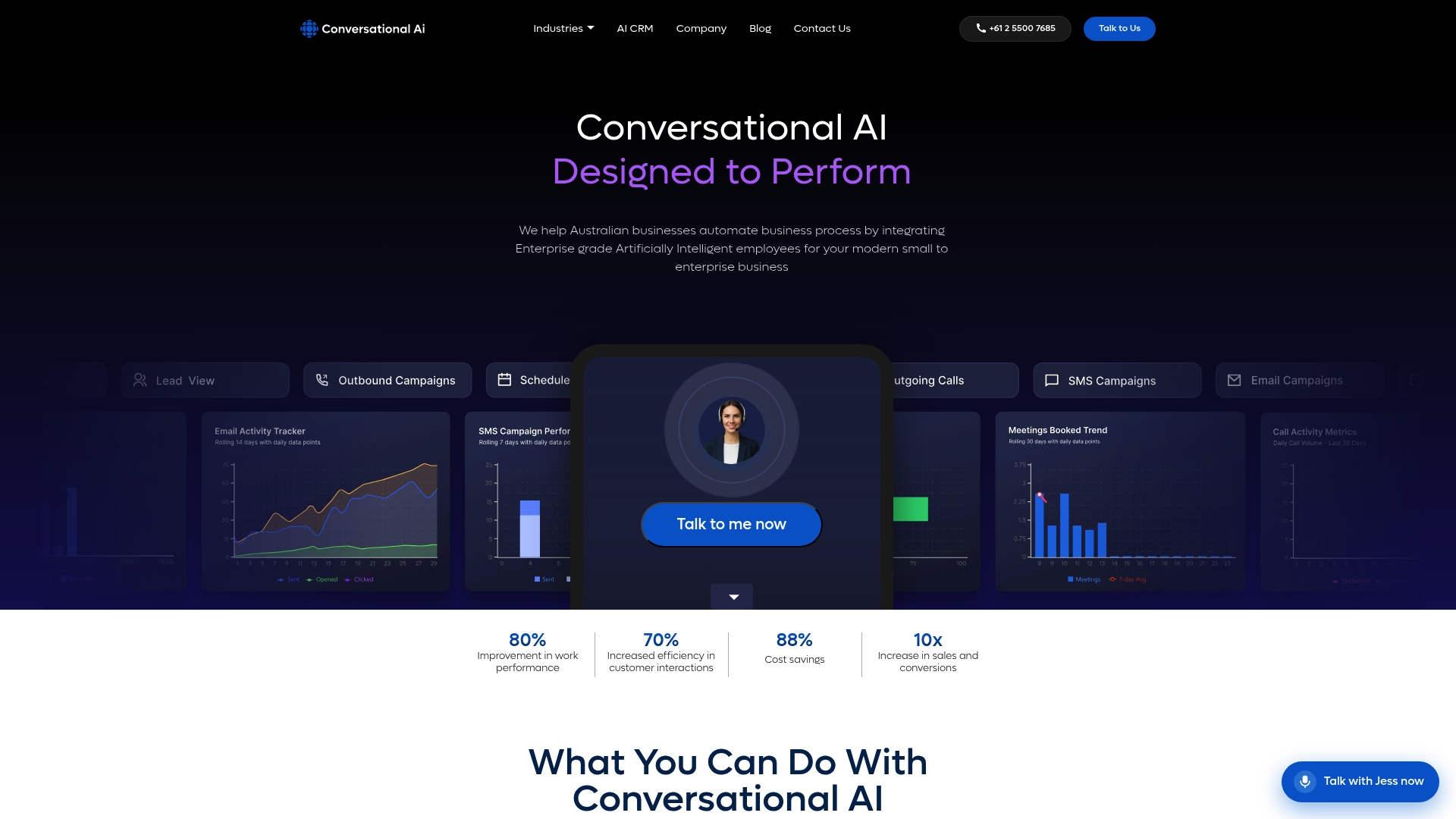
If data residency and conversation quality are both non-negotiable for you, consider a platform built onshore, in Australia, as a private cloud deployment, which keeps your customer data under your control rather than routed through third-party infrastructure. Some platforms support voice, SMS, email and live chat agents with CRM integration already built in, so a multilingual rollout doesn’t mean reworking your existing systems.
For regulated sectors weighing up on-premises options, our on-premises deployment page covers what private-cloud hosting looks like in practice, and our customer service industry page sets out how this applies to support operations specifically. If you’d rather compare quotes from independent developers first, 5Quotes connects you with vetted Australian teams for custom builds.
FAQ
What are the best AI chatbot platforms?
The right platform depends on your priorities: some are optimised for broad language coverage, others for data residency and compliance in regulated sectors. For Australian organisations handling sensitive customer data, an onshore, private-cloud platform with CRM integration is worth weighing against general-purpose cloud providers.
Can you talk to AI in different languages?
Yes, most modern conversational AI systems support multiple languages, either through built-in multilingual models or a translation layer connected to a single-language bot. Quality varies by approach: native multilingual models and hybrid pipelines tend to hold conversational context better than a translation layer alone, according to WMT 2024 shared task findings.
What are NLP-based chatbots?
NLP-based chatbots use natural language processing to interpret what a customer types or says, identify intent, and generate an appropriate response rather than matching fixed keywords. This underpins multilingual support, since the same NLP pipeline can be trained or fine-tuned across several languages to maintain consistent intent recognition.
How do multilingual chatbots preserve context across a conversation?
They preserve context by carrying forward prior turns, either through a summarised conversation history fed back into the model or through retrieval-augmented generation that keeps responses grounded in relevant content. The WMT 2024 Chat Translation Shared Task found that systems using contextual inputs and in-domain fine-tuning outperformed those translating each turn in isolation.
Sources
- Guidance on privacy and the use of commercially available AI products | OAIC
- Findings of the WMT 2024 Shared Task on Chat Translation