Voicebot vs IVR in Australia: Test Calls Before You Buy
Compare voicebots and IVR for Australian customer service. Learn how to test real call metrics, ask about OAIC privacy, and choose a hybrid setup.

Use a voicebot when you need automated resolution for repeatable, multi-turn tasks. Keep IVR for deterministic routing, security checks and compliance prompts. Most contact centres end up running both, choosing between them based on call complexity, containment goals and privacy requirements rather than on which technology sounds newer.
TL;DR:
- Use IVR for deterministic routing, identity checks, and verbatim compliance prompts; choose a voicebot for repeatable tasks such as appointment changes or balance checks.
- Hybrid systems can retain IVR for routing and compliance, use voicebots for intake and resolution, and offer callers an easy path to a person.
- Test proof of concept on real calls covering noise, accents, and interruptions, then measure task completion, transfer accuracy, abandonment, and cost per successful resolution.
- Before deployment, connect the bot to CRM and telephony systems, preserve caller context during human handoffs, and provide fallback for low confidence recognition.
- Voice identification can qualify as sensitive biometric information, so obtain explicit consent and verify how recordings, transcripts, and voice data are stored and deleted.
Table of Contents
- What is an IVR and what is a voicebot?
- Routing versus resolution: the core technical difference
- Pros and cons: where each approach actually wins
- When to choose a voicebot, IVR or a hybrid
- Implementation: integration, handoff design and operational readiness
- Proof-of-concept testing: KPIs and a practical checklist
- Privacy and data handling: what procurement needs to ask
- Our take on the voicebot versus IVR decision
- How our platform supports enterprise voice automation
- FAQ
- Sources
What is an IVR and what is a voicebot?
A traditional IVR (Interactive Voice Response) system routes callers through fixed menus using DTMF tones (“press 1 for billing”) or basic closed-keyword recognition. It follows a script: no understanding, just branching logic based on a limited set of accepted inputs.
A voicebot, sometimes called a conversational voice agent, uses automatic speech recognition (ASR), natural language understanding (NLU) and text-to-speech (TTS) to hold a multi-turn conversation and complete a task, not just direct a call.
- Traditional IVR: menu-driven, DTMF or simple keyword spotting, no memory of context.
- Voicebot: free natural language, multi-turn dialogue, can retain context across a call.
- Conversational IVR: a middle ground that adds limited natural language recognition to an otherwise menu-based structure.
Routing versus resolution: the core technical difference
The clearest way to separate these two systems is by what they are actually trying to do. An IVR routes: it moves a caller to the right queue or person. A voicebot aims to resolve: it tries to finish the task itself, whether that is rescheduling an appointment or checking an order status.
That distinction shapes everything else:
- Input handling: IVR accepts DTMF or narrow keyword sets, voicebots process open, free-form speech.
- Flexibility: IVR fails when a caller says anything unscripted, voicebots are built to handle variation in phrasing.
- Outcome: IVR gets you to the right place, a voicebot tries to finish the job there and then.
Telephone audio adds complications that lab-quality voice testing does not reveal. Background noise, regional accents, hold music bleed and overlapping speech all degrade recognition accuracy in ways that clean, controlled recordings never show. Speech evaluation work from the National Institute of Standards and Technology shows that testing on real conversational telephone speech is essential, because laboratory audio alone is not a reliable predictor of production performance. Any comparison between these two approaches has to account for how each behaves on a noisy phone line, not just in a demo.
Pros and cons: where each approach actually wins
Voicebots and IVR solve different problems well, and the trade-offs are concrete rather than theoretical.
- Voicebots handle open-ended intake better, letting callers state their need in their own words instead of hunting through menus.
- Voicebots can lift containment meaningfully for well-defined, repeatable tasks like booking changes or balance checks.
- Voicebots generate richer conversational data and analytics, useful for spotting recurring friction points.
- Voicebots require more integration work, more rigorous testing and tighter privacy controls, which adds to build and monitoring cost.
- IVR remains predictable and cheap to maintain for simple, low-complexity call flows.
- IVR is well suited to compliance-driven prompts, like recorded disclosures or identity verification steps that must follow an exact script.
- IVR performs poorly once a query becomes complex or the caller’s need does not map cleanly onto a menu option.
Neither system is universally better. The right choice depends on what the call is actually for.
When to choose a voicebot, IVR or a hybrid
A few rules of thumb cut through most of the decision quickly:
- If the goal is resolution of a defined, repeatable task, a voicebot is usually worth the investment.
- If the goal is deterministic routing, identity checks or a compliance script that must be read verbatim, IVR still does the job well.
- Caller segments matter: older callers or those with limited comfort speaking to a machine may need an easy opt-out to a human.
- Legacy telephony that expects DTMF input can make a full voicebot replacement harder than it looks on paper.
- Hybrid patterns, where IVR handles initial routing and compliance, and a voicebot takes over for intake and resolution, suit most mid-to-large contact centres.
Pro Tip: Start your hybrid design by mapping which calls genuinely need a human decision and which ones are just information retrieval, then automate the second group first.
Implementation: integration, handoff design and operational readiness
Getting a voicebot or hybrid system to work reliably is mostly an integration problem, not a conversational AI problem. The model can be excellent and still deliver a poor experience if the plumbing behind it is weak.
- Connect the voicebot to your CRM and telephony stack so agent context (account details, reason for call, prior interactions) travels with the caller.
- Design handoffs carefully: a caller who repeats their account number to a human after already giving it to the bot will judge the whole system as broken.
- Build fallback paths for low-confidence recognition, so calls drop to a human or a simpler IVR menu rather than looping.
- Monitor call quality and capacity continuously, including VoIP latency and jitter, since audio degradation undermines even a well-trained model.
Our integration steps for enterprise voice agents walk through this in more detail, and teams checking their network readiness can run the VoIP latency tests from Grandspeed before committing to a rollout.
Proof-of-concept testing: KPIs and a practical checklist
A proof-of-concept only means something if it is tested on real calls, not scripted demo audio. Background noise, accents, interruptions and code-switching all need to show up in your test set.
- Build the PoC dataset from live call recordings, covering a representative spread of accents and channels.
- Measure intent recognition accuracy against a labelled sample of real queries.
- Track task completion rate for the specific workflows you plan to automate.
- Check transfer accuracy: does the handoff land the caller with the right person, with the right context?
- Record average handling time, call abandonment and repeat-contact rate within seven days.
Gartner recommends building the business case on cost per successful resolution rather than headline automation percentages, since that figure reflects what the system actually delivers once failures and escalations are counted.
Privacy and data handling: what procurement needs to ask
Voice carries specific privacy obligations once it is used for identification. Under the Privacy Act, voice used for identification can be classed as biometric information, which is treated as sensitive information requiring explicit consent. That changes what procurement teams need to verify before signing anything.
- Ask where call recordings, transcripts and voice embeddings are stored, and for how long.
- Confirm deletion timelines and whether data crosses borders during processing.
- Check whether vendor terms permit your data to be reused for training their underlying models.
- Require a documented consent flow wherever voice is used for identity verification.
Our guide on preventing offshore data transfers sets out the specific contract clauses worth requesting from any vendor handling voice data.
Our take on the voicebot versus IVR decision
The mistake we see most often is treating this as a technology upgrade rather than a task-by-task decision. The right question isn’t “which is more advanced” but “does this call need routing or resolution.” For regulated sectors, data sovereignty and integration depth matter more than conversational polish, and a rushed PoC on clean audio will mislead you every time. Hybrid architectures, tested properly, tend to deliver the steadiest returns.
— Sowrabh
How our platform supports enterprise voice automation
We built our conversational AI platform to run entirely on Australian-hosted infrastructure, with voice agents that integrate directly into your CRM rather than sitting beside it as a separate tool.
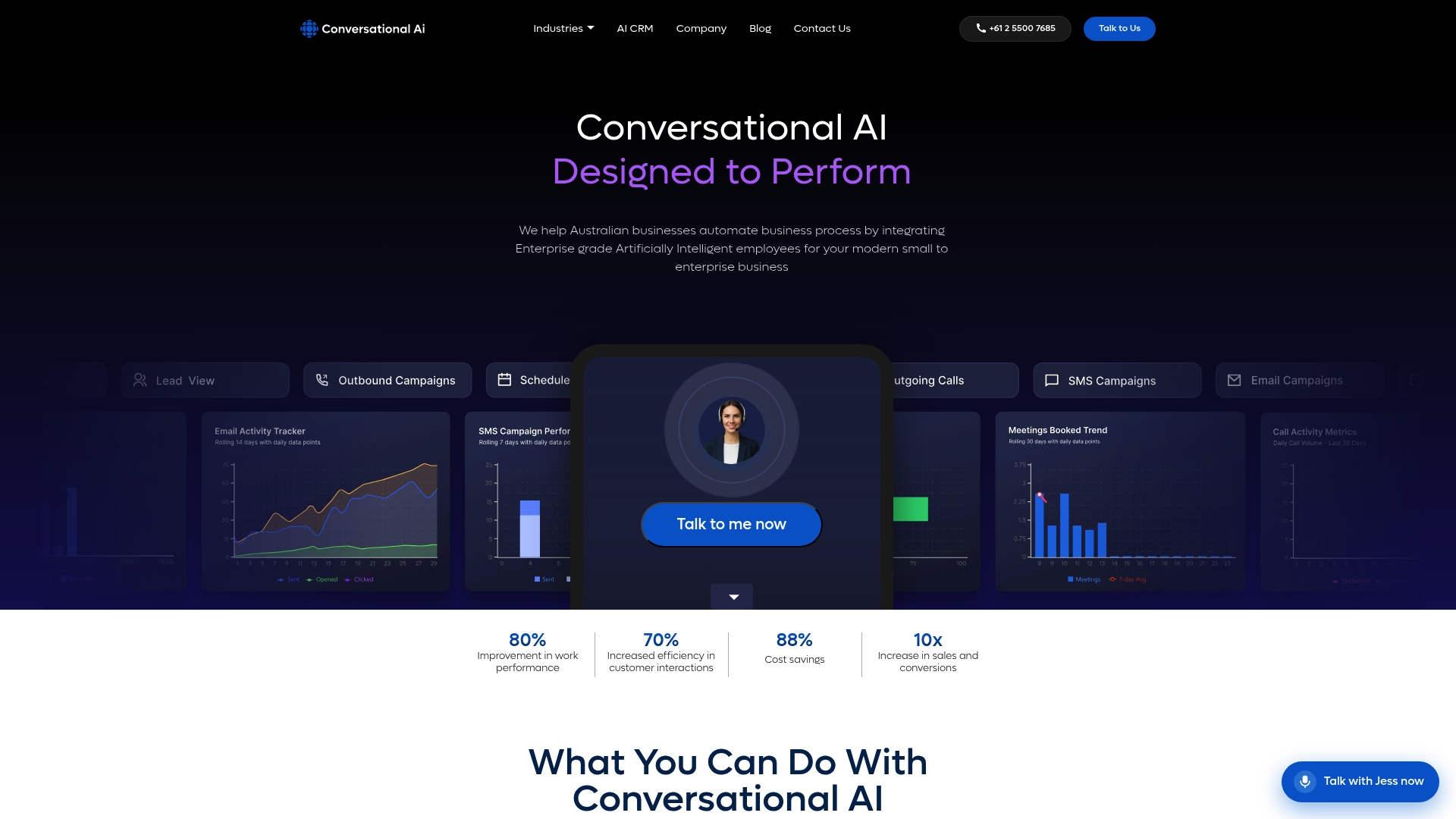
- Voice AI Agents can handle multi-turn resolution while keeping context synced to CRM systems.
- Our Conversational AI CRM gives your team one place to see every interaction, voice included.
- Our customer service industry page outlines how contact centres typically structure a hybrid rollout.
If you are weighing a voicebot against your existing IVR, our team can walk through your call data and show where automation would genuinely help. Book a demo to see it against your own call flows.
FAQ
Is a voicebot safe to use for customer calls?
Voicebots are generally safe when built with proper fallback paths and privacy controls, though safety depends on vendor practices around data storage and consent. Because voice can be classed as biometric information under the Privacy Act, organisations should confirm consent handling and retention before deployment.
How do you use an IVR number?
Callers dial the business number as usual and respond to prompts by pressing keys or, in a conversational IVR, by speaking limited keywords. The system then routes the call to the right queue, department or recorded message based on those inputs.
How much does an IVR system cost?
Costs vary widely depending on call volume, telephony provider and whether the system is basic DTMF or a more advanced conversational IVR, and no single published figure covers every deployment. Organisations typically request quotes based on their specific call flows rather than relying on a flat industry rate.
Is IVR a form of AI?
Traditional IVR is not AI: it runs on fixed menu logic and tone or keyword detection. A conversational IVR adds limited natural language processing, placing it somewhere between classic IVR and a full voicebot.
Sources
- Biometric scanning | OAIC
- Gartner press release: GenAI cost-per-resolution forecast (2026)
- 2017 Pilot Open Speech Analytic Technologies Evaluation (NIST IR 8242)