30 Day Chatbot Retention Plan OAIC NAA Aligned for Compliance
Australia first 30 day plan mapping chatbot flows to five retention tiers. Aligns with OAIC and NAA guidance and enforces automated expiry plus vendor...

There is no single statutory retention period for chatbot logs in Australia. You must justify every retention period under the Privacy Act and the Australian Privacy Principles, document your reasoning, and enforce it with tiered, automated expiry and redaction. Start by mapping your data flows, classifying what you hold, and checking whether your chatbot vendor trains on customer conversations. The OAIC and the National Archives of Australia are your two primary references for getting this right.
TL;DR:
- Organizations must justify their chatbot data retention periods under Australian privacy law and implement automated deletion and redaction processes.
- Support transcripts containing sensitive information may require retention beyond standard periods if they serve legal or business purposes, with documentation of the reasoning.
- Vendor contracts must explicitly prohibit model training on customer conversations unless explicitly agreed, and data must be stored and processed within Australian borders when possible.
- Technical controls like automated expiry pipelines, PII redaction at ingestion, encryption, and secure backups are essential to enforce retention policies effectively.
- Conducting regular data flow mapping and a detailed DPIA ensures risks are identified, mitigated, and documented, aligning with regulator guidance and audit requirements.
Table of Contents
- What should your 7 to 30 day chatbot data retention action plan look like?
- How does the Privacy Act apply to chatbot logs?
- How should you classify chatbot data and set retention periods?
- What technical controls actually enforce a retention policy?
- What should you check in vendor contracts and data-use terms?
- How do you run a DPIA for an LLM-based chatbot?
- What does auditability and legal hold handling for chatbot data look like?
- What’s a practical rollout plan for a chatbot retention policy?
- How do sovereign, Australia-hosted platforms support this compliance model?
- What mistakes do compliance teams keep making, and how do you fix them?
- How can Conversational AI help you enforce retention at the platform level?
- Where can you find the authoritative Australian guidance on this?
- Sources
What should your 7 to 30 day chatbot data retention action plan look like?
Most organisations discover their chatbot retention policy is really just “whatever the vendor’s defaults happen to be.” That’s not a policy. It’s an accident waiting to be audited.
Here’s the sequence that gets you from exposed to defensible within a month:
- Map every chatbot data flow. Trace what the bot collects, where it’s stored, who can access it, and whether it leaves Australia. Assign a data owner for each flow, not just a general “IT is responsible” note.
- Set provisional retention ranges for each data tier. You don’t need perfection on day one. A working range beats no range.
- Switch on automated expiry and redaction wherever your platform supports it. If it doesn’t support it, that’s now a procurement issue, not a future problem.
- Review your provider’s training and contract clauses. Confirm in writing whether conversations feed model training and how to opt out.
- Log every decision in a retention register. Regulators and auditors want to see reasoning, not just outcomes.
This isn’t a compliance exercise for its own sake. A documented, even imperfect, retention register is what turns “we think we deleted that” into proof you actually did.
How does the Privacy Act apply to chatbot logs?
The Privacy Act 1988 (Cth) doesn’t mention chatbots by name, but it doesn’t need to. The Australian Privacy Principles apply to any personal information a chatbot collects, stores, uses or discloses, whether that information sits in a support transcript, a session token, or a training dataset your vendor maintains offshore.
Four APPs do most of the heavy lifting when you’re deciding how long to keep chatbot data:
- APP 1 (open and transparent management) requires a publicly available policy explaining what your chatbot collects and how long you keep it. Vague statements like “we retain data as needed” won’t survive scrutiny.
- APP 3 (collection) limits you to collecting only what’s reasonably necessary for your business function. A support bot that logs full conversation transcripts including irrelevant personal disclosures is collecting more than it needs.
- APP 6 and APP 7 (use and disclosure) restrict you from using chatbot data for a secondary purpose, such as marketing or model training, unless the customer would reasonably expect it or has consented.
- APP 11 (security) requires you to destroy or de identify personal information once it’s no longer needed for any purpose it was collected for, or for a purpose it can be legitimately used for under the APPs.
APP 11 is where most organisations trip up, because it flips the usual instinct. The default corporate posture is “keep everything, just in case.” The Privacy Act runs the other way: once the purpose is served, ongoing retention becomes the risk, not the safeguard.
The legal test isn’t a calendar date. It’s necessity and proportionality. Ask: is retaining this specific data still necessary for the purpose we collected it for, and is the length of time proportionate to that purpose? A three year old support transcript about a forgotten password reset almost certainly fails that test. A three year old transcript documenting a formal complaint that led to a compensation payment probably doesn’t, because it may need to be retained as a business record.
That last point matters because the Privacy Act doesn’t operate in isolation. Other Commonwealth and state laws can impose minimum retention periods that override your instinct to delete early:
- Financial services records often carry statutory retention obligations tied to the Corporations Act 2001 and AUSTRAC requirements.
- Tax related records generally require retention periods set by the Australian Taxation Office.
- Health records carry state based minimum retention periods that vary depending on the patient’s age and the type of record.
The National Archives of Australia is explicit that AI generated records with ongoing business value or legal significance must be managed under standard records management principles, not treated as disposable logs simply because a chatbot produced them. That’s the crucial distinction compliance teams often miss: a chatbot transcript that resolves a customer’s billing dispute isn’t just “chat data” anymore. It’s a business record, and it inherits whatever retention obligation applies to that record type.
How should you classify chatbot data and set retention periods?
Not all chatbot data carries the same risk, and treating it as one undifferentiated blob is how organisations end up either over retaining sensitive transcripts or accidentally deleting something they were legally required to keep.
A workable taxonomy splits chatbot data into five tiers, each with a different risk profile and a different retention logic:
- Transient or session data — the temporary tokens and state variables that let a conversation flow. This has no business value once the session closes.
- Operational and debug logs — technical logs used for troubleshooting and performance monitoring, generally stripped of conversational content.
- Support transcripts and case records — the actual back and forth between customer and bot, often containing personal and sometimes sensitive information.
- Training and analytics datasets — aggregated or derived data used to improve the bot or measure performance.
- Legal evidence — transcripts tied to a complaint, dispute, incident, or regulatory inquiry.
| Data tier | Suggested retention range | Justification (shorten or extend) |
|---|---|---|
| Transient/session data | 1 day to 30 days | Shorten to the session length if no debugging value exists; extend only if fraud detection requires a short lookback window |
| Operational/debug logs | 30 days | Shorten once monitoring dashboards confirm stability; extend for systems under active incident investigation |
| Support transcripts/case records | a period appropriate to business needs and sensitivity | Shorten for low sensitivity queries (store hours, product FAQs); extend where a dispute, complaint, or refund is involved |
| Training/analytics datasets | retained according to identifiability and anonymisation status | Shorten identifiable datasets aggressively; anonymised datasets carry far lower ongoing risk |
| Legal evidence | retained as required until legal matters are resolved and applicable limitation periods expire | Extend automatically once a legal hold is applied; document the trigger and the reviewer who applied it |
That anonymised versus identifiable distinction in the training tier isn’t a technicality. Industry guidance consistently recommends keeping raw conversation logs for a short period while retaining anonymised analytics for much longer, because the anonymised layer delivers most of the analytical value your business actually wants, at a fraction of the regulatory exposure.
Regulated sectors need to adjust these ranges upward and document why. A healthcare provider’s chatbot handling appointment bookings that touch on symptoms or medical history should treat those transcripts as health records, subject to state based minimums that can run well beyond the ranges above. A financial services chatbot discussing loan eligibility or account details should align retention with AUSTRAC and Corporations Act obligations rather than the generic support transcript range. In both cases, the deviation from the standard range isn’t the problem. Failing to document why you deviated is the problem an auditor will actually flag.
What technical controls actually enforce a retention policy?
A retention policy that lives in a PDF and nowhere else in your infrastructure is not a retention policy. It’s a wish. The AI technical standard’s data supply chain requirements push agencies toward exactly this point: retention has to be engineered, not just declared.
Four technical layers do the actual enforcement:
- Automated expiry pipelines with immutable deletion logs. Data ages out on a schedule, and the system records that the deletion happened, when, and under which policy rule, without a human needing to remember to run a script.
- PII detection and redaction at ingestion. Structured fields like names, phone numbers, and account identifiers get flagged and masked the moment they enter the system, not weeks later during a manual review.
- Pseudonymisation and anonymisation, applied carefully. Anonymised data can sit outside your strictest retention rules, but only if it’s genuinely irreversible. Pseudonymised data that can be re identified with a lookup table is still personal information under the Privacy Act, and treating it otherwise is a common and costly misclassification.
- Encryption, key management, and secure archival. Data that must be retained for legal or statutory reasons still needs to sit encrypted at rest, with key management practices that meet recognised storage security controls, and backups that don’t quietly outlive the primary record they’re supposed to mirror.
That last point deserves attention because it’s where policies quietly fail. You delete a support transcript from your production database on schedule, tick the box, and move on. Then six months later a backup snapshot restores that same transcript because nobody aligned the backup retention window with the deletion policy. The EDPB’s analysis of LLM privacy risks makes a related point that’s easy to overlook: deleting training data from a dataset doesn’t guarantee the patterns encoded in a model’s weights disappear with it. If your chatbot vendor has trained a model on customer conversations, deletion requests need to reach the training pipeline, not just the transcript store.
Pro Tip: Before you sign off on any automated expiry pipeline, test it against your backup schedule specifically. Ask whether a deleted conversation can be resurrected from a backup taken the day before deletion, and if the answer is yes, your retention policy has a hole a regulator will find before you do.
Platform level controls matter here too. Chatbot vendors increasingly offer per bot retention settings rather than a single global default, and understanding how to set up secure conversational AI at the platform level, including anonymising transcripts and configuring deletion schedules, is where policy intent turns into enforced behaviour.
What should you check in vendor contracts and data-use terms?
The single most consequential question in any chatbot procurement conversation is one that’s easy to skip past: does this vendor train its models on our customers’ conversations?
Consumer grade AI tools often default to using interactions for training unless a customer explicitly opts out. Enterprise and API tiers are generally where you get a reliable zero training guarantee, but “generally” isn’t good enough for a signed contract. You need it stated in writing, not inferred from a pricing page.
Your legal and procurement teams should be running down this checklist before any chatbot vendor contract gets signed:
- Training use. Does the contract explicitly state whether conversation data is used for model training, and does the enterprise tier exclude it by default or only on request?
- Data sovereignty. Where is the data physically stored and processed, and does that location create cross border transfer obligations under the APPs?
- Retention limits. Does the vendor allow you to set your own retention periods per conversation type, or does the platform impose a single fixed default?
- Audit rights. Can you request evidence of deletion, or are you relying entirely on the vendor’s word?
- Deletion guarantees. What is the vendor’s committed timeframe for actioning a deletion request, and does that timeframe cover backups as well as production data?
- Breach notification SLAs. How quickly is the vendor contractually obliged to tell you about an incident affecting your customers’ data?
Vendor platform documentation often reveals default behaviours that surprise procurement teams after the fact. Some conversational platforms default session data to a 30 day expiry unless you configure a custom setting, which is a sensible baseline but one that needs to be explicitly checked, not assumed. If your chatbot handles anything covered by the Payment Card Industry Data Security Standard, the retention and training questions above apply with extra force, and PCI compliant chatbot design becomes a distinct procurement requirement rather than a nice to have. Cross border data flows deserve their own scrutiny too, particularly where a vendor’s infrastructure sits offshore by default; avoiding unintended offshore transfers is a contract negotiation, not something you discover after go live.
How do you run a DPIA for an LLM-based chatbot?
A Data Protection Impact Assessment for a chatbot isn’t a form you fill in once and file away. It’s the working document that proves you thought about the risks before they became incidents.
- Scope the assessment. Define exactly which chatbot deployment, which channels, and which data categories the DPIA covers. A single DPIA covering “all chatbots” is too broad to be useful.
- Map every data flow, including third parties. Identify where data enters, where it’s processed, whether a third party model provider touches it, and whether any part of that path crosses a border.
- List lifecycle risks stage by stage. The EDPB’s lifecycle framework is useful here: risk at collection differs from risk at inference, which differs again from risk during model training or retrieval augmented generation, and from risk during storage and eventual deletion.
- Select mitigations for each identified risk. Redaction at ingestion addresses collection risk. Contractual training exclusions address the training leak risk. Automated expiry addresses storage risk.
- Document residual risk and name a reviewer. Some risk will remain after mitigation. Write down what it is, why it’s acceptable, and who signed off on that judgement.
- Flag when to consult the OAIC. If your chatbot deployment involves a high privacy risk, particularly around sensitive information categories or large scale profiling, the OAIC’s guidance on commercially available AI products is the right first port of call before you finalise the assessment.
What does auditability and legal hold handling for chatbot data look like?
Here’s the scenario that catches organisations out: your automated expiry pipeline works exactly as designed, deletes a batch of support transcripts on schedule, and then three weeks later a regulator or a plaintiff’s lawyer asks you to produce exactly those records.
You need two things working in tandem to avoid that outcome: proof of deletion, and a process for stopping deletion when it matters.
- Deletion proofs and immutable audit trails. Every deletion event should generate a log entry that itself can’t be altered or quietly removed, timestamped, and tied to the specific retention rule that triggered it.
- Integration with incident response. When a data breach occurs, your retention system needs to tell your incident response team exactly what data existed, in what form, and for how long, without a manual audit taking days.
- A legal hold process that overrides automated expiry. The moment litigation, a regulatory inquiry, or a formal complaint becomes reasonably foreseeable, a designated person needs the authority to flag specific records and suspend their scheduled deletion.
- Documented scope for every hold. A legal hold that’s too broad (“hold everything”) defeats the purpose of having a retention policy at all. Scope it to the matter, document who applied it and why, and set a review date.
Legal guidance for Australian organisations deploying chatbots consistently points to the same operational gap: businesses build a retention policy but never update their data breach response plan to reference it. If your incident response runbook doesn’t mention where chatbot data sits, how long it’s kept, or who can freeze deletion, the retention policy and the breach plan are operating as two disconnected documents instead of one system. Storage architecture choices, including how backups are secured and who holds access, feed directly into how auditable your retention story actually is when someone eventually asks you to prove it.
What’s a practical rollout plan for a chatbot retention policy?
Rolling out a new retention regime across an existing chatbot deployment works best as a staged process rather than a single cutover, because you want evidence the automation actually works before you rely on it for a real deletion event.
- Map every existing data flow and current retention behaviour, including whatever the vendor’s default settings actually do today.
- Classify each data category against the five tier taxonomy and assign provisional ranges.
- Pilot automated expiry on one low risk data tier first, such as transient session data, before touching support transcripts.
- Verify deletions actually occurred, checking both production systems and backup snapshots.
- Scale the automation across remaining tiers once the pilot confirms deletion proofs are generating correctly.
A sample retention schedule gives your team a starting document to adapt rather than building one from a blank page:
Testing deletion isn’t a one off exercise either. Run a scheduled check that confirms records aging out of the production system are also aging out of backups on a matching (or intentionally offset and documented) timeline, and repeat that check after any platform migration or vendor change.
How do sovereign, Australia-hosted platforms support this compliance model?

Hosting location changes what’s practically achievable, not what’s legally required. A platform built and hosted within Australia removes an entire category of cross border transfer questions that otherwise complicate every retention decision you make.
The features that matter most for compliance are the boring, practical ones: per bot retention controls that let you set different rules for a sales chatbot versus a health intake bot, PII redaction hooks at the point of ingestion, and audit logs that record deletion events without requiring a manual export.
Ask any chatbot vendor claiming sovereignty or compliance to show you the actual data flow diagram, not just the marketing page. Request evidence of where servers sit, how backups are secured, and whether they hold relevant certifications such as SOC 2 or ISO 27001, before you take a compliance claim on faith.
Conversational AI’s platform is built around Australian hosting and per tenant retention settings, and organisations weighing up sovereign AI options for regulated industries should still request that evidence directly rather than assuming a vendor’s compliance posture matches their own obligations.
What mistakes do compliance teams keep making, and how do you fix them?
The mistake I see most often isn’t a bad policy. It’s a good policy nobody automated. Teams write a thorough retention document, get it approved, and then rely on someone remembering to action it manually. That never survives contact with a busy quarter.
Second: assuming consumer grade AI defaults apply to your enterprise deployment. They usually don’t, and that assumption gets exposed the moment a customer lodges an access request.
Third: backup schedules that quietly outlive the retention policy governing production data. Fix it by testing backup alignment on the same schedule you test production deletion.
Fourth: shadow AI, staff using unapproved chatbot tools outside your governed platform. The fix is visibility, not just a policy memo, because a rule nobody can see nobody follows.
— Sowrabh
How can Conversational AI help you enforce retention at the platform level?
Some platforms offer retention rules integrated within their system, including Australian hosting, per bot retention settings, PII redaction hooks, and audit logging, which can be managed centrally rather than across disparate vendor tools and compliance documents.
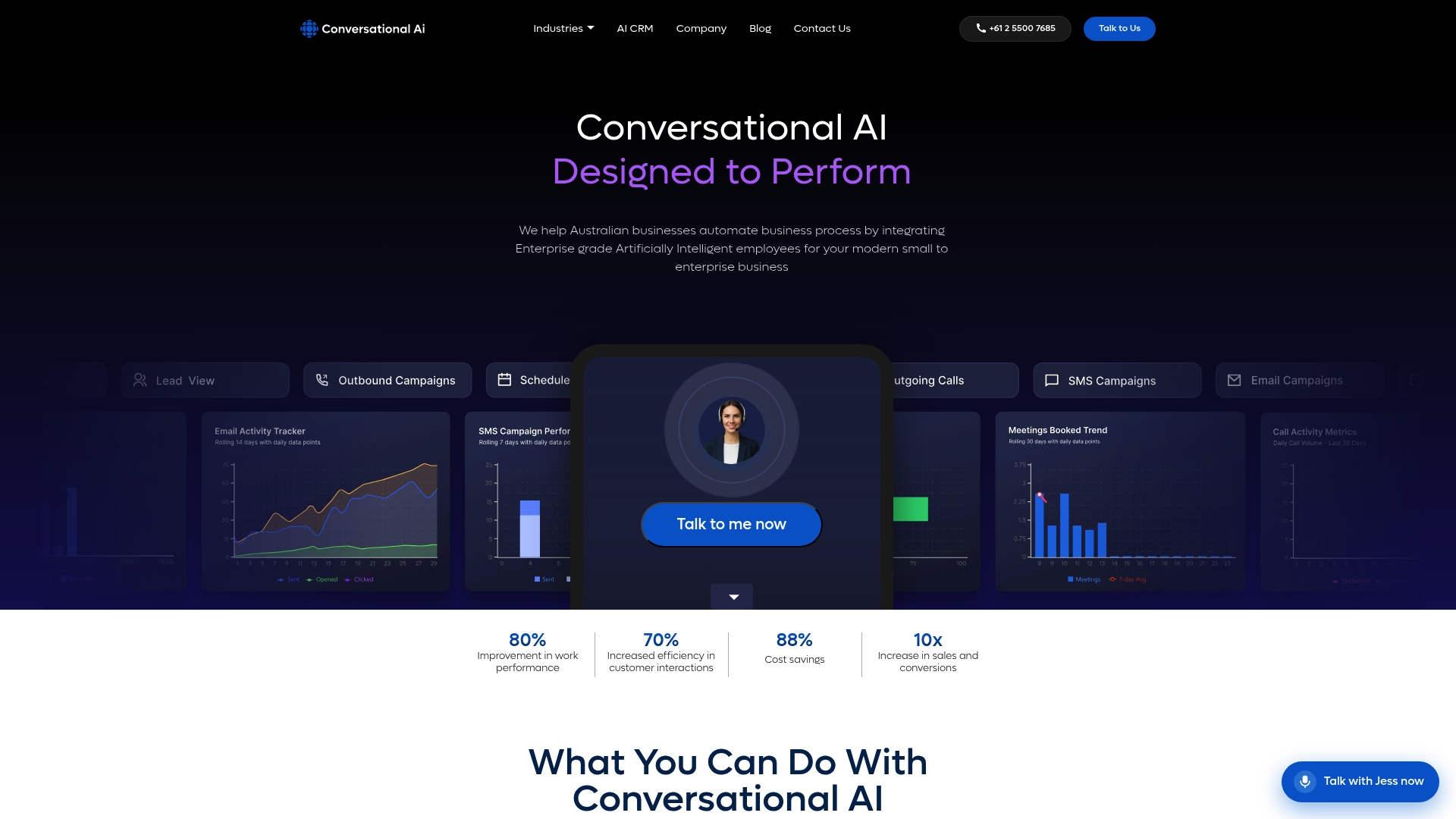
This capability matters most for organisations in healthcare, finance, and professional services, where the tiers and technical controls covered above serve as a baseline for handling customer data. Contextual memory and automated follow-up features need to align with policies that prove what has been kept, redacted, and deleted, and platforms built on Australian hosted architectures can help make that evidence retrievable rather than needing to be reconstructed under audit pressure.
If you’re ready to see how per tenant retention controls and audit logging would work against your own data flows, request a demo through Conversational AI and bring your current retention register to the conversation.
Where can you find the authoritative Australian guidance on this?
Build your policy from primary sources, not secondary summaries, and revisit them whenever your chatbot deployment changes scope.
- OAIC guidance on commercially available AI products — the primary regulator reference for applying the Privacy Act and APPs to AI systems.
- NAA guidance on AI generated records — recordkeeping obligations for AI outputs with ongoing business value.
- Digital Government AI technical standard, statement 13 — data supply chain and retention expectations for government AI systems.
- cyber.gov.au — operational cyber security guidance relevant to storage, backups, and incident response planning.
- business.gov.au — practical compliance resources for businesses navigating privacy and data obligations.
This article is general information, not a substitute for advice from a qualified lawyer. Consult a qualified legal professional about your own circumstances before acting on anything here.
Sources
- Guidance on privacy and the use of commercially available AI products — OAIC
- Information management for records created using Artificial Intelligence (AI) technologies — NAA
- AI technical standard: Statement 13 — Digital Government
- AI privacy risks and mitigations in LLMs — EDPB (2025)
- Data retention policies for AI systems — AISA