Why data sovereignty matters for Australian voice AI
Most voice-AI platforms route your customer conversations through US infrastructure by default. For regulated Australian businesses, that's a real problem - here's why, and what to do about it.
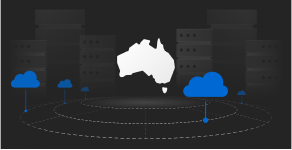
When you put a voice AI agent in front of your customers, you’re handing it some of the most sensitive data your business holds: who’s calling, why, their account details, their health concerns, their financial situation. The question of where that data goes isn’t a technicality. For a lot of Australian businesses, it’s the whole decision.
The default is offshore
Most of the well-known voice-AI platforms are US companies running on US-based, multi-tenant cloud infrastructure. When a call comes in, the audio, the transcript, and the structured data it produces are processed and often stored offshore — by default, without you necessarily realising it.
That’s fine for plenty of use cases. It is not fine if:
- You’re in healthcare and bound by the Privacy Act and the Australian Privacy Principles, plus state-level health-records legislation.
- You’re in financial services and answerable to ASIC and APRA’s CPS 234.
- You’re in debt collection and need to demonstrate exactly how every consumer interaction was handled.
- Your board has put data sovereignty on the risk register — which, post-2023, a lot of Australian boards have.
Why “they’re compliant” isn’t the same as “your data stays here”
A US platform can be HIPAA-eligible, SOC 2 certified, and GDPR-aligned, and still process your customer data in Oregon. Compliance certifications describe how a vendor handles data; they don’t change where it physically lives or which jurisdiction’s law governs it.
For an Australian regulated business, the cleaner question to ask a vendor is blunt:
“Does any of our customer data — audio, transcripts, or derived records — leave Australia at any point, under any circumstance?”
If the honest answer is “sometimes, for processing,” you have a sovereignty gap, no matter how many compliance badges are on the website.
What sovereign-by-default actually looks like
We built Conversational AI so the answer to that question is always “no, unless you explicitly choose otherwise.” In practice that means:
- Data stays in Australia by default — every byte of audio, every transcript, every CRM record on Australian infrastructure.
- On-premise deployment for organisations that need a zero-offshore footprint — your hardware, your network, optionally air-gapped.
- No third-party LLM in the critical path — we own the full stack, so your data isn’t routed through OpenAI, Gemini, or anyone else mid-call.
- Locked, versioned scripts and full audit logs so you can prove, after the fact, exactly what the agent said and did.
The bottom line
Voice AI is going to handle more and more of your customer conversations. The businesses that win with it are the ones who get the sovereignty question right before they deploy, not after a breach forces the conversation.
If you’d like to talk through what a sovereign deployment would look like for your operation, book a 20-minute call. We’ll walk through your call volume, your compliance regime, and whether on-prem or AU-hosted is the right fit.