7 Actionable Controls to Keep Australian Healthcare Chatbots Compliant
Actionable checklist to make Australian healthcare chatbots meet Privacy Act, AHPRA and TGA rules. Covers APP 8 vendor due diligence, retrieval grounded...

Yes, Australian healthcare providers can deploy chatbots, but the safe ground is narrower than most vendors admit. Low-risk administrative use, like booking appointments or answering opening-hours questions, is generally fine with good privacy practice. Anything touching triage, diagnosis, or clinical advice pulls in three separate regulators at once: the OAIC under the Privacy Act, the TGA if the tool meets the medical device definition, and AHPRA through your own professional obligations. The checklist below shows what a compliant deployment actually looks like.
TL;DR:
- Healthcare chatbots primarily need to comply with privacy laws if they only handle administrative tasks like scheduling or FAQ responses.
- Chatbots involved in clinical advice, diagnosis, or triage are subject to TGA regulation, AHPRA oversight, and must demonstrate safety and performance measures.
- Data residency within Australia helps meet compliance, especially under APP 8, and on-premises hosting can maximize data control and auditability.
- Strong governance, including designated clinical ownership and documented escalation procedures, is key to avoiding model-related failures and compliance breaches.
- Vendors offering private cloud solutions or on-premises deployment simplify adherence to privacy and security standards, supporting compliance from inception.
Table of Contents
- What Australian healthcare chatbot compliance actually requires
- Privacy Act rules for health chatbots: APP 8 and APP 11 explained
- When does a healthcare chatbot become a regulated medical device?
- [Meeting AHPRA obligations for AI in clinical practice](#meeting-ahpra-obligations-for-ai-in-clinical-practicehttpswwwahpragovauresourcesartificial-intelligence-in-healthcare)
- Building a compliant chatbot: architecture, controls and vendor contracts
- Matching your chatbot project to your compliance maturity
- How Australian-hosted infrastructure supports compliance goals
- What actually separates compliant deployments from risky ones
- Get a compliance-ready chatbot built for Australian healthcare
- Sources
- FAQ
What Australian healthcare chatbot compliance actually requires
Getting healthcare chatbot compliance in Australia right means knowing which regulator governs which part of your chatbot’s behaviour, because no single law covers the whole thing. A booking bot and a triage bot can run on identical technology yet sit under completely different rulebooks depending on what they’re built to do.
Five bodies of law and regulation matter here:
- Privacy Act 1988 and the Australian Privacy Principles (APPs), enforced by the OAIC, covering how patient data is collected, stored, and disclosed.
- The Therapeutic Goods Act 1989, administered by the TGA, which decides whether your chatbot is a regulated medical device requiring ARTG inclusion.
- AHPRA’s professional obligations, which sit on the practitioner personally, regardless of what software they use.
- State-based health records legislation (varying by jurisdiction, including NSW, Victoria, and Queensland), which can impose additional retention and access rules on top of federal privacy law.
- Australian Consumer Law, relevant if chatbot marketing overstates what the tool can safely do.
The fastest way to triage this is to write an intended purpose statement before you write a line of code or sign a vendor contract. Ask plainly: does this chatbot recommend, diagnose, monitor, or triage anything clinical? If yes, you’re likely in TGA and AHPRA territory. If the answer is genuinely no, and it only schedules, reminds, or answers FAQs, your compliance burden sits mostly with privacy law. Put a regulatory owner’s name against that intended purpose statement in your project brief. Vague ownership is how compliance gaps happen.
Privacy Act rules for health chatbots: APP 8 and APP 11 explained
Health information is classified as sensitive information under the Privacy Act, which means it attracts a higher standard of protection than ordinary personal data. Any chatbot that collects symptoms, appointment reasons, or Medicare details is handling sensitive information from the first message.
Two APPs matter most in practice:
- APP 8 (cross-border disclosure). If your chatbot vendor processes data offshore, even briefly, through a US-hosted large language model, you need to take “reasonable steps” to ensure the overseas recipient doesn’t breach the APPs. In practice, that means enforceable contractual clauses, the right to audit the vendor, and a documented preference for Australian-hosted processing where clinical data is involved.
- APP 11 (security). You must protect health information from misuse, loss, and unauthorised access, and that obligation doesn’t disappear because a chatbot vendor is doing the processing on your behalf.
The Privacy and Other Legislation Amendment Act 2024 adds a further layer: mandatory disclosure requirements for automated decision-making take effect by December 2026, so any chatbot that influences a decision about a patient needs a documented explanation of how it works. If a breach involving your chatbot’s data occurs, the Notifiable Data Breach scheme requires you to report it to affected patients and the OAIC where serious harm is likely.
Before go-live, confirm your privacy policy names the chatbot vendor, your consent wording covers AI processing specifically (not buried in generic “third party” language), your retention period is documented and enforced, and your vendor’s data processing agreement forbids using patient conversations to train other customers’ models.
Pro Tip: Treat “reasonable steps” under APP 8 as a contract negotiation, not a tick box. Push for an explicit clause banning secondary use of conversation data, and ask for evidence of where the data physically sits, not just where the vendor is headquartered.
When does a healthcare chatbot become a regulated medical device?
The TGA doesn’t regulate chatbots by category. It regulates them by intended purpose. A chatbot built to book appointments, remind patients of forms, or answer general clinic FAQs typically sits outside the medical device definition. A chatbot built to suggest a diagnosis, triage symptoms towards an urgency level, or monitor a chronic condition and flag deterioration usually meets the software as a medical device (SaMD) test and needs to sit on the Australian Register of Therapeutic Goods.
If your chatbot does trip that threshold, the TGA expects:
- Documented evidence of safety and performance, including how the tool was validated against clinical scenarios.
- A risk management file identifying failure modes, such as what happens when the model gives a confidently wrong answer.
- Clinical data supporting the specific intended purpose, not just general claims about the underlying AI model’s capability.
Legal commentary from Clayton Utz makes a point worth repeating to your marketing team: scope creep in how you describe the tool can change its regulatory status even without a single line of code changing. Calling an appointment bot a “smart triage assistant” in your website copy can be enough to invite TGA scrutiny. Keep the marketing language as literal as the actual function.
Meeting AHPRA obligations for AI in clinical practice
AHPRA’s position is unambiguous on one point: accountability doesn’t transfer to the software. If a chatbot generates a clinical suggestion and a practitioner acts on it, that practitioner must still be able to justify the decision to their Board, regardless of what the AI recommended.
Turning that principle into governance means:
- Naming a specific clinical owner accountable for how each AI tool is used, not a generic “IT department” line item.
- Getting informed consent from patients before AI processes their data, worded plainly rather than folded into a lengthy terms document.
- Running periodic audits of chatbot outputs against clinical notes to catch drift or hallucination early.
- Keeping a risk register that documents known failure modes and how staff are trained to respond.
AHPRA’s published case studies include practitioners who used consumer-grade generative AI tools for note cleaning or scribing, only to discover the tool had sent identifiable patient data offshore or fabricated clinical details that were never said in the consultation. That’s the exact failure mode governance is meant to catch before it reaches a patient file.
Pro Tip: Keep a simple log of every AI-assisted clinical decision, even a one-line note. If a Board enquiry ever asks “why did you rely on this,” a contemporaneous record beats a reconstructed explanation months later.
Building a compliant chatbot: architecture, controls and vendor contracts
Compliance isn’t a policy document sitting in a drawer. It has to be built into the chatbot’s architecture, not bolted on afterwards.
- Ground the chatbot in retrieval, not free generation. Retrieval-grounded design ties every response to a curated, provider-approved set of content, which cuts hallucination risk and makes every answer traceable to a source document your clinical team actually vetted.
- Enforce scope with deterministic refusals. The chatbot should refuse, not improvise, when a question falls outside its approved intended purpose. A booking bot asked “should I be worried about this chest pain” needs a hard-coded escalation path to a human, not a best guess.
- Set human escalation SLAs. Define exactly how fast a flagged conversation reaches a real clinician, and audit whether that SLA is actually met.
- Sample and review logs regularly. Clinical staff should read a rotating sample of chatbot transcripts, not just the ones that triggered a complaint.
- Control feature creep through a change process. Every update to the chatbot’s scope should trigger a fresh look at whether it has drifted into TGA territory, echoing the TGA’s own warning that intended purpose can shift with a single feature update.
- Lock down the vendor contract. Insist on clauses forbidding secondary use of conversation data, specifying data residency, mandating encryption, and setting a firm breach notification timeframe, ideally in hours, not weeks.
- Test before launch, then keep testing. Build an evaluation dataset of realistic patient queries, including edge cases and adversarial prompts, and revisit it periodically rather than treating go-live as the finish line.
One reasonable industry framing worth flagging to your board: the Department of Health’s national review found Australia’s existing frameworks can largely accommodate AI, but stakeholders consistently flagged data sovereignty and governance gaps as the areas needing the most attention right now, not the underlying technology itself.
Vendor guidance on avoiding offshore data transfers and setting a defensible retention policy is worth reading alongside your own DPA review, since both problems tend to surface at the same point in a procurement process.
Matching your chatbot project to your compliance maturity
Not every chatbot project deserves the same regulatory scrutiny, and pretending otherwise wastes resources you could spend on governance where it matters.
- Low-risk (start here): appointment booking, opening hours, referral status updates, and general FAQ answers. Minimal safeguards required: a clear privacy notice and a human escalation path for anything unexpected.
- Moderate-risk: pre-consultation intake, symptom collection ahead of a GP visit, or medication reminder follow-ups. These need documented oversight, a named clinical reviewer, and regular output audits, even without full ARTG registration.
- High-risk: diagnostic suggestions, symptom-based triage that assigns urgency, or scribing tools that infer clinical conclusions from a consultation. These usually require ARTG registration and full clinical governance before go-live, not after a near-miss.
The Department of Health’s review points to the same practical sequencing: pilot the administrative use case first, measure its performance and complaint rate, then expand cautiously into clinical territory under a defined governance plan.
How Australian-hosted infrastructure supports compliance goals
Data residency does a lot of the compliance heavy lifting under APP 8, because keeping patient conversations on Australian servers removes an entire category of cross-border disclosure risk before you’ve even written a DPA clause. A private cloud platform hosted entirely within Australia, with multi-channel agents across voice, SMS, and live chat, and CRM integration that keeps a record trail for every conversation, addresses several of the checklist items above directly: residency for APP 8, audit trails for AHPRA recordkeeping, and on-premises deployment for organisations that need the strictest possible data control. None of this replaces your own privacy impact assessment or clinical governance sign-off, but it removes a significant chunk of the technical risk from the conversation.

What actually separates compliant deployments from risky ones
Most failures we see in this space aren’t caused by a bad model. They’re caused by weak governance around a perfectly capable one, a chatbot deployed with no named clinical owner, no escalation path, and no one checking transcripts until a complaint lands. The model choice matters far less than whether someone is actually accountable for what it says.
Start narrow. Pilot an administrative use case, document every governance decision as you go, and only expand into clinical territory once that paperwork trail exists and holds up under scrutiny. If your use case sits anywhere near diagnosis or triage, get your compliance and clinical teams talking to each other before you talk to a vendor.
— Sowrabh
Get a compliance-ready chatbot built for Australian healthcare
Most off-the-shelf chatbot platforms make you choose between convenience and data control. Some platforms avoid forcing a trade-off between convenience and data control by providing private cloud solutions hosted entirely within Australia, which can support APP 8 residency preferences and APP 11 security expectations, without routing patient conversations through offshore infrastructure you can’t audit.
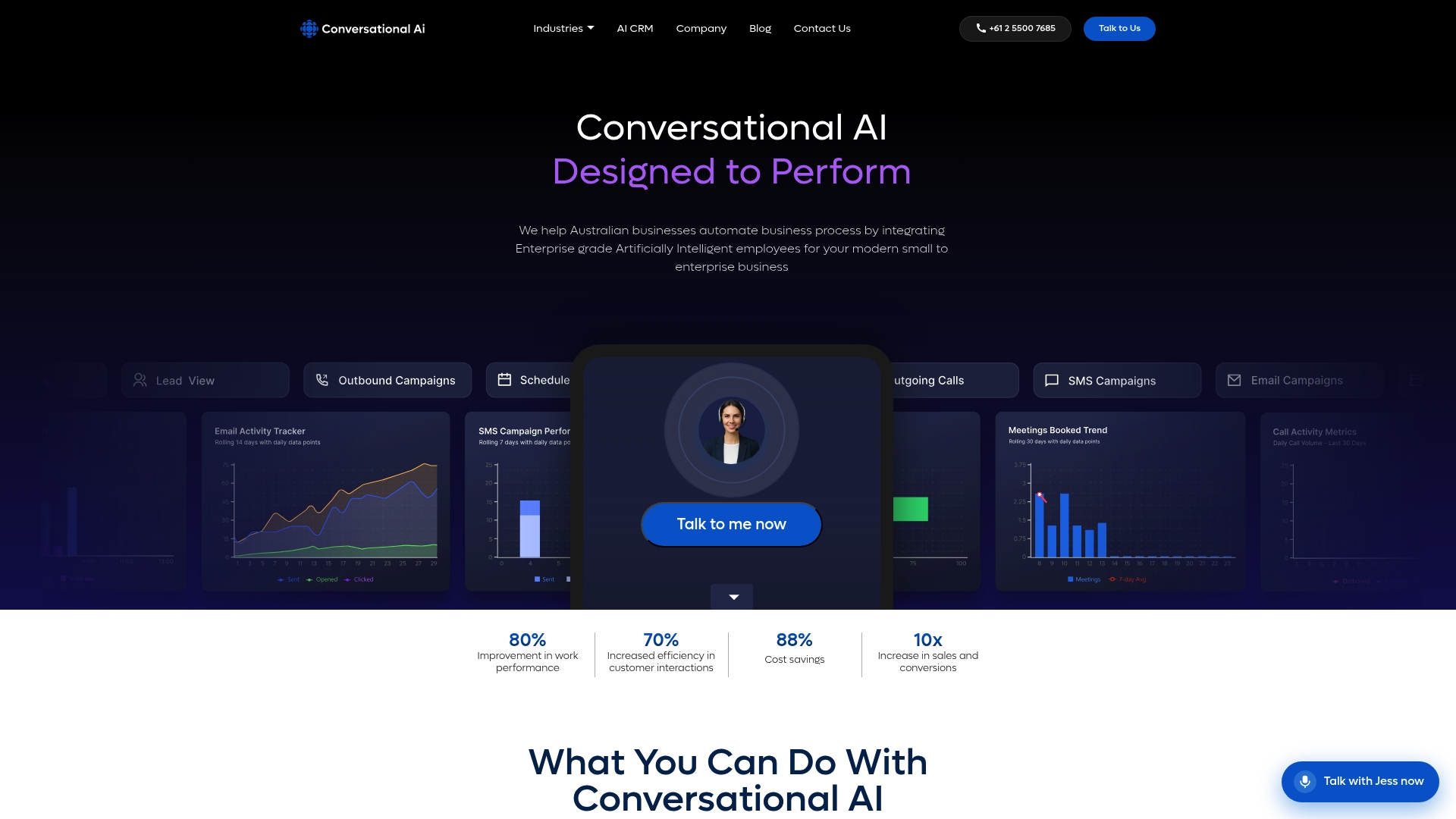
The platform’s healthcare-specific offering integrates with your existing CRM to keep an auditable record trail for every patient interaction, supporting the recordkeeping AHPRA expects during a Board or audit enquiry. For providers who need the strictest possible control over where data physically sits, on-premises deployment is available as well. If you’re planning a chatbot pilot for appointment booking, FAQs, or pre-consultation intake, request a compliance-focused demo and walk through your privacy impact assessment with the team before you commit to a vendor.
This article is general information, not a substitute for advice from a qualified doctor. Consult a qualified healthcare professional about your own circumstances before acting on anything here.
Sources
- Guidance on privacy and the use of commercially available AI products — OAIC
- Artificial intelligence (AI) and medical device software regulation — TGA
- Healthcare software: TGA clarifies when AI will be regulated as a medical device — Clayton Utz
FAQ
Are there specific AI regulations in Australia for healthcare chatbots?
There’s no single “AI law” in Australia. Instead, chatbots are governed by a combination of the Privacy Act and APPs, the Therapeutic Goods Act for anything meeting the medical device definition, and AHPRA’s professional obligations for practitioners.
Which chatbots meet Australian health data compliance standards?
There’s no formal certification labelled “compliant” the way HIPAA works in the US. Compliance depends on how a specific chatbot is configured: where data is hosted, what its vendor contract says about secondary use, and whether its intended purpose keeps it outside TGA’s medical device definition. Australia-hosted platforms with documented DPA terms, such as Conversational AI’s healthcare offering, make several of these checks easier to satisfy.
What are the AHPRA AI guidelines for medical practice?
AHPRA’s guidance centres on practitioner accountability: you must obtain informed consent before AI processes patient data, and you remain responsible for any clinical decision even if AI generated the underlying suggestion. Its published case studies show real failure modes, including offshore data exposure from consumer scribing tools.
How is AI actually being used in Australian healthcare right now?
Most current use sits in low-risk administrative territory: appointment booking, patient reminders, and answering routine clinic questions. Clinical uses like triage and diagnostic support exist but require far more governance, and the Department of Health’s national review found most providers are still building out the governance structures needed to expand safely.
Does a chatbot need TGA registration to operate in an Australian clinic?
Only if it meets the software as a medical device definition based on its intended purpose. A chatbot that books appointments or answers FAQs typically doesn’t need ARTG inclusion, but one that suggests diagnoses, triages symptoms, or monitors a condition usually does.