Production Safe Agent Training Data Pipeline with Line Level Curation
Engineer first guide to production safe agent training data pipelines. Trajectory format, line level curation, and execution checks to make pipelines...

An agent training data pipeline is the continuous flow that turns raw traces, logs and simulator runs into training-ready trajectories. The recommended architecture runs ingest, curate, standardise, validate and orchestrate as distinct stages feeding a reproducible dataloader into your trainer. Validation and feedback loops aren’t a final gate; they run continuously, catching drift and bad trajectories before they poison the next fine-tuning round.
TL;DR:
- Running deduplication on the trajectory’s action sequence, rather than just text, helps preserve critical pattern information for training agents.
- Line-level filtering retains more usable data by excising only problematic turns, avoiding the wastefulness of discarding entire transcripts.
- Standardizing multi-turn trajectory data in a fixed format with consistent fields simplifies pipeline robustness and reduces maintenance overhead.
- Employing sandboxed execution checks on tool calls ensures that only valid, executable trajectories contribute to training, catching syntax and logic errors early.
- Tracking metadata such as source, license, quality score, and filter parameters enables reproducibility, efficient debugging, and provenance accountability in large-scale pipelines.
Table of Contents
- What does an agent training data pipeline actually do?
- How do you ingest and deduplicate agent training data at scale?
- Why does line-level curation beat document-level filtering?
- What format should multi-turn agent trajectories use?
- Can you safely generate synthetic training data from production logs?
- How do execution-based checks catch bad training trajectories?
- Which orchestration tools fit each pipeline stage?
- What’s the right way to store and stream training datasets at scale?
- How do you partition data for distributed agent training?
- What metadata does a reproducible pipeline need to keep?
- How does Conversational AI apply these patterns in production?
- What checklist gets a pipeline from prototype to production?
- Ready to put a production-safe pipeline behind your agents?
- Where to go deeper on agent pipeline design
- Sources
What does an agent training data pipeline actually do?
Picture the pipeline as five handoffs, each with a clear owner and a clear output. Raw data enters through ingestion, gets cleaned and filtered during curation, gets reshaped into a consistent format during standardisation, gets checked for correctness during validation, and finally lands in a dataloader that feeds your distributed trainer.
The tricky part for agentic systems is that data isn’t static text. A single training example might span a user message, a tool call, an API response, an observation, and a follow-up action, all before the agent produces a final answer. That multi-turn shape has to survive every stage without losing its structure.
- Ingestion pulls from production logs, transcripts, simulators and crowd contributions.
- Curation removes low-quality lines and deduplicates near-identical content.
- Standardisation converts everything into one trajectory format with consistent metadata.
- Validation runs execution checks and reject-sampling before anything reaches training.
- Orchestration ties the stages together as a reproducible, auditable DAG.
Synthetic generation and human review don’t sit in one spot. Synthetic trajectories are typically seeded early (right after ingestion) and then re-validated through the same execution checks as real data, while human review clusters around the curation and validation stages where automated confidence is lowest. That’s also where evaluation harnesses hook in, sampling a slice of validated trajectories before every training run to catch regressions early.
How do you ingest and deduplicate agent training data at scale?
Agent data comes from five practical sources: production interaction logs, chat or voice transcripts, simulator rollouts, crowd-sourced task completions, and web snapshots used for grounding knowledge. Each source has its own noise profile, and treating them identically at ingestion is the most common mistake teams make.
Streaming ingestion suits high-velocity sources like production logs and live transcripts, where new trajectories arrive continuously and waiting for a batch window adds latency you can’t afford in a fast-moving agent deployment. Batch ingestion still makes sense for periodic sources: nightly simulator dumps, weekly crowd contribution exports, or web crawls that don’t change hour to hour. Most production pipelines end up running both, with a streaming path for freshness and a batch path for bulk reprocessing.
Deduplication is where scale bites hardest. Exact-match hashing catches obvious repeats but misses near-duplicates, which is most of the actual redundancy in agent logs (the same customer question phrased six slightly different ways). Two techniques handle this well in practice:
- Bloom filters for fast, memory-efficient approximate membership testing across billions of records.
- Paragraph-level shingling to catch near-duplicate spans inside otherwise distinct documents.
Deep knowledge from the FLUX approach recommends combining paragraph-level Bloom-filter deduplication with a document-level fallback, balancing precision against recall better than either method alone. The common pitfall: deduplicating too aggressively at the document level strips out legitimately distinct trajectories that just happen to share boilerplate scaffolding, like a repeated system prompt.
Pro Tip: Run deduplication on the trajectory’s action sequence, not just its raw text. Two conversations can read differently while representing the exact same tool-call pattern, and that repetition matters more for agent training than surface-level phrasing.
Why does line-level curation beat document-level filtering?
Document-level rejection throws away an entire transcript because one turn was garbled, one tool call failed, or one line contained a formatting artefact. That’s wasteful, and it’s exactly the failure mode the FLUX research addresses. Line-level excision cuts out only the offending lines and keeps the rest, recovering substantially more usable tokens while maintaining or improving downstream model performance.
For agent trajectories specifically, this matters more than in plain text curation. A ten-turn trajectory with one malformed tool response is still nine turns of good behaviour to learn from. Rejecting the whole thing on a document-level filter throws away signal you paid to collect.
A layered curation stack typically includes:
- Quality classifiers trained on labelled good/bad examples specific to your domain.
- Perplexity gating to flag statistically anomalous or incoherent turns.
- Toxicity and safety filters tuned to the agent’s deployment context.
- Line-level excision passes that remove flagged spans rather than whole documents.
Broader ablation work on pretraining set construction confirms that deduplication, quality filtering and sampling weights materially affect downstream accuracy, not just data volume. Automated filters get you most of the way, but agent trajectories carry edge cases that classifiers routinely miss (subtle tool-argument errors, a technically valid but nonsensical action sequence). Active learning helps here: route the trajectories where your quality classifier is least confident to human annotators, rather than sampling review budget randomly.
What format should multi-turn agent trajectories use?
Heterogeneous trajectory formats are the single biggest source of pipeline fragility. If your simulator logs shape data one way and your production transcripts shape it another, every downstream loader needs bespoke handling, and every bug fix has to be applied twice.
The fix, as described in the AgentOhana research, is a homogeneous multi-turn format built around three consistent fields per turn: input, action, observation. Standardising on this structure, plus a generic dataloader that consumes it, simplifies loaders and preserves equilibrium across heterogeneous data sources during distributed training.
Build the format around these steps:
- Define required metadata per turn: source, timestamp, tool name (if applicable), success flag, and a unique trajectory ID.
- Slice long trajectories against your model’s context window, keeping tool-call and observation pairs intact rather than splitting mid-action.
- Generate pairwise samples from adjacent good and rejected completions when preparing data for supervised fine-tuning or direct preference optimisation.
- Tag provenance on every record so you can trace a training example back to its raw source during debugging.
- Shard deterministically using a fixed seed so re-running the pipeline produces identical shard assignments, which is what makes device-independent training genuinely reproducible.
Skipping step five is a common shortcut that costs you later: without deterministic sharding, you can’t reproduce a training run to debug a regression, and you can’t prove to an auditor which data version produced which model checkpoint.
Can you safely generate synthetic training data from production logs?
Yes, and it’s usually the fastest way to fill gaps that real traffic doesn’t cover often enough, like rare failure recoveries or edge-case tool sequences. The safest pattern, described in the NexGAP project, is a propose-validate-observe loop: a generator proposes a candidate trajectory seeded from a real production log, a validator checks it against execution rules, and only observed, verified outcomes get added to the training set.

The part teams skip, and shouldn’t, is deliberately designing failure-mode samples. An agent that’s only ever seen successful tool calls has no idea how to recover when an API times out or returns malformed data. Seed synthetic generation with realistic failure scenarios (a rate limit, a missing field, a stale cache) so the agent learns recovery behaviour, not just the happy path.
Mixing real and synthetic data needs a weight schedule, not a fixed ratio. Early in training, leaning heavier on synthetic data covering rare cases helps the model see enough failure diversity. As training progresses, shifting weight back toward real production trajectories keeps the model grounded in actual user behaviour rather than the generator’s biases.
- Seed synthetic generation from real logs, never from scratch.
- Validate every synthetic trajectory through the same execution checks as real data.
- Schedule the real-to-synthetic mix rather than fixing it for the whole run.
Pro Tip: Track what percentage of your training set is synthetic, per epoch, and log it alongside your evaluation metrics. When a model starts behaving oddly, that ratio is often the first thing worth checking.
How do execution-based checks catch bad training trajectories?
Sandboxed execution is the most reliable filter you’ll build, because it tests whether a trajectory actually works rather than whether it looks plausible. The AgentSynth project demonstrates this pattern well: run each candidate trajectory’s tool calls against a minimal runtime, and automatically flag anything that throws a syntax error, hallucinates an argument the tool doesn’t accept, or fails to complete its action loop.
Reject-sampling heuristics decide what happens to a flagged trajectory. A hard failure (malformed JSON in a tool call, a call to a tool that doesn’t exist) gets discarded outright. A softer failure (a valid call with a questionable argument choice) is often worth re-annotating rather than discarding, since the surrounding turns may still carry useful signal.
- Run every candidate through sandboxed tool-call execution before it reaches curation.
- Discard hard failures automatically; route soft failures to human re-annotation.
- Sample a fixed percentage of passing trajectories for manual audit, not just the failures.
- Log rejection reasons by category so recurring failure patterns surface in aggregate.
That last point matters more than it sounds. Sandboxed validation and reject sampling let teams automatically detect and discard trajectories with syntax errors or hallucinated tool arguments, but the real value comes from watching why things fail over time, not just filtering them out. A spike in one rejection category usually means an upstream data source or a tool schema changed, and you want to know that before it shows up as a training regression.
Which orchestration tools fit each pipeline stage?
Orchestration choice depends on how much structure you want enforced versus how much flexibility your team needs day to day. Two mature options cover most agent pipeline needs, and they solve different problems.
Kubeflow Pipelines organises components as directed graphs and compiles them to Kubernetes resources, which suits teams that already run Kubernetes infrastructure and want caching, parallel execution and artifact tracking built in in a strongly structured way. It’s a good fit for the validation and orchestration stages specifically, where you want every run’s inputs, outputs and parameters tracked automatically.
Metaflow takes a lighter dataflow approach: flows are DAGs with persisted data artifacts and straightforward foreach/branch constructs for parallelism. It tends to suit teams prioritising developer ergonomics over infrastructure control, particularly during the ingestion and curation stages where you’re iterating quickly on filter logic.
Neither tool was built with agent pipelines specifically in mind. Research on pipeline patterns for complex ML systems notes that most orchestration tools target single-model lifecycles, which means agent pipelines need extra patterns bolted on for continuous synthetic generation and validation loops rather than a single train-and-deploy cycle.
- Use Kubeflow when Kubernetes-native artifact tracking and reproducibility matter most.
- Use Metaflow when fast iteration on curation logic matters more than infrastructure rigidity.
- Layer Kafka or Flink streaming connectors on top of either for low-latency agent updates.
- Track every artifact’s lineage regardless of tool, since agent pipelines run far more often than a typical training job.
What’s the right way to store and stream training datasets at scale?
Once your dataset outgrows what fits comfortably in memory, streaming readers stop being optional. Streaming approaches, including the pattern used by Hugging Face’s datasets streaming mode, let you iterate over massive corpora without loading the whole thing at once, which matters enormously for agent trajectories carrying rich multi-turn context.
Shard-aware dataloaders pair naturally with this. Practitioner guidance on training pipelines recommends streaming readers combined with line-level excision specifically to preserve high-value tokens while keeping memory bounded, rather than loading and filtering after the fact.
- Store raw and curated data separately in object storage, with clear pipeline-root conventions per version.
- Use memory-limited loaders that read shards on demand rather than materialising the full dataset.
- Cache frequently accessed shards locally during active training runs to cut repeated network reads.
- Decide deliberately between retaining pre-parsed shards versus re-parsing at training time. Retention costs storage; re-parsing costs compute every run.
The retention-versus-re-parsing trade-off is worth revisiting per project rather than defaulting to one answer. A dataset that changes weekly probably isn’t worth pre-parsing and storing multiple versions of. One that’s stable for months is.
How do you partition data for distributed agent training?
Naive global shuffling across devices sounds simple but quietly introduces correlation bugs, especially when your data comes from multiple sources with different volumes. The AgentOhana approach preserves independent randomness by sharding by source first, then applying a seeded shuffle within each shard before interleaving across devices.
- Shard by source before shuffling, so no single device ends up overrepresenting one data origin.
- Fix your shuffle seed and log it alongside every training run’s manifest.
- Interleave shards deterministically across devices to preserve per-source equilibrium.
- Re-seed per epoch deliberately if you want varied exposure order across multiple passes over the data.
Get this wrong and you’ll see it as subtle bias rather than an obvious crash: a model that performs unevenly across data sources for no reason your evaluation harness immediately explains.
What metadata does a reproducible pipeline need to keep?
Every record needs enough metadata to answer “where did this come from and can I trust it” without opening the raw source file. At minimum: source identifier, licence, an automated quality score, the annotator ID (if human-reviewed), and its sampling weight during training.
- Record source, licence and quality score on every trajectory, not just flagged ones.
- Keep a dataset manifest per training run, listing exact shard versions and filter parameters used.
- Log every preprocessing transform applied, in order, so a training input can be reconstituted from raw data.
- Maintain an audit trail linking model checkpoints back to the dataset manifest that trained them.
This is the difference between a pipeline you can debug in an afternoon and one where a regression takes a week to trace. Skimping on provenance metadata always feels fine until the first serious incident.
How does Conversational AI apply these patterns in production?
Building multichannel agents across voice, SMS, email and live chat means every deployment generates its own trajectory streams, and those streams need the same ingestion, curation and validation discipline covered above. Conversational AI’s approach to communication orchestration reflects lessons from running these pipelines against real enterprise traffic rather than lab benchmarks.
- Data residency requirements shape ingestion design from day one, not as an afterthought.
- CRM integration points double as a natural source for labelled outcome data, useful for reject-sampling thresholds.
- The most common enterprise pitfall observed: teams validate agent behaviour in staging but skip execution-based checks once the agent hits live multichannel traffic, where tool schemas and CRM fields drift over time.
The remedy is straightforward: treat validation as continuous, not a pre-launch gate.
What checklist gets a pipeline from prototype to production?
Before a first production rollout, I’d check three things in order: safety gates first (execution validation catching hard failures), evaluation milestones second (a held-out set that mirrors real traffic, not just synthetic samples), then monitoring last. Track rejection-rate trends and human-review turnaround weekly at minimum. The KPI that tells you most about pipeline health isn’t accuracy. It’s how often your validation layer’s rejection categories shift week to week, since that’s your earliest warning of upstream drift.
— Sowrabh
Ready to put a production-safe pipeline behind your agents?
Most teams building an agent training data pipeline hit the same wall eventually: the data work is only half the job, because the agent still needs somewhere private and compliant to run once it’s trained. Conversational AI is the alternative to stitching together your own multichannel infrastructure. Its private cloud is hosted entirely within Australia, so the data sovereignty requirements that shaped your curation and provenance decisions carry straight through to deployment.
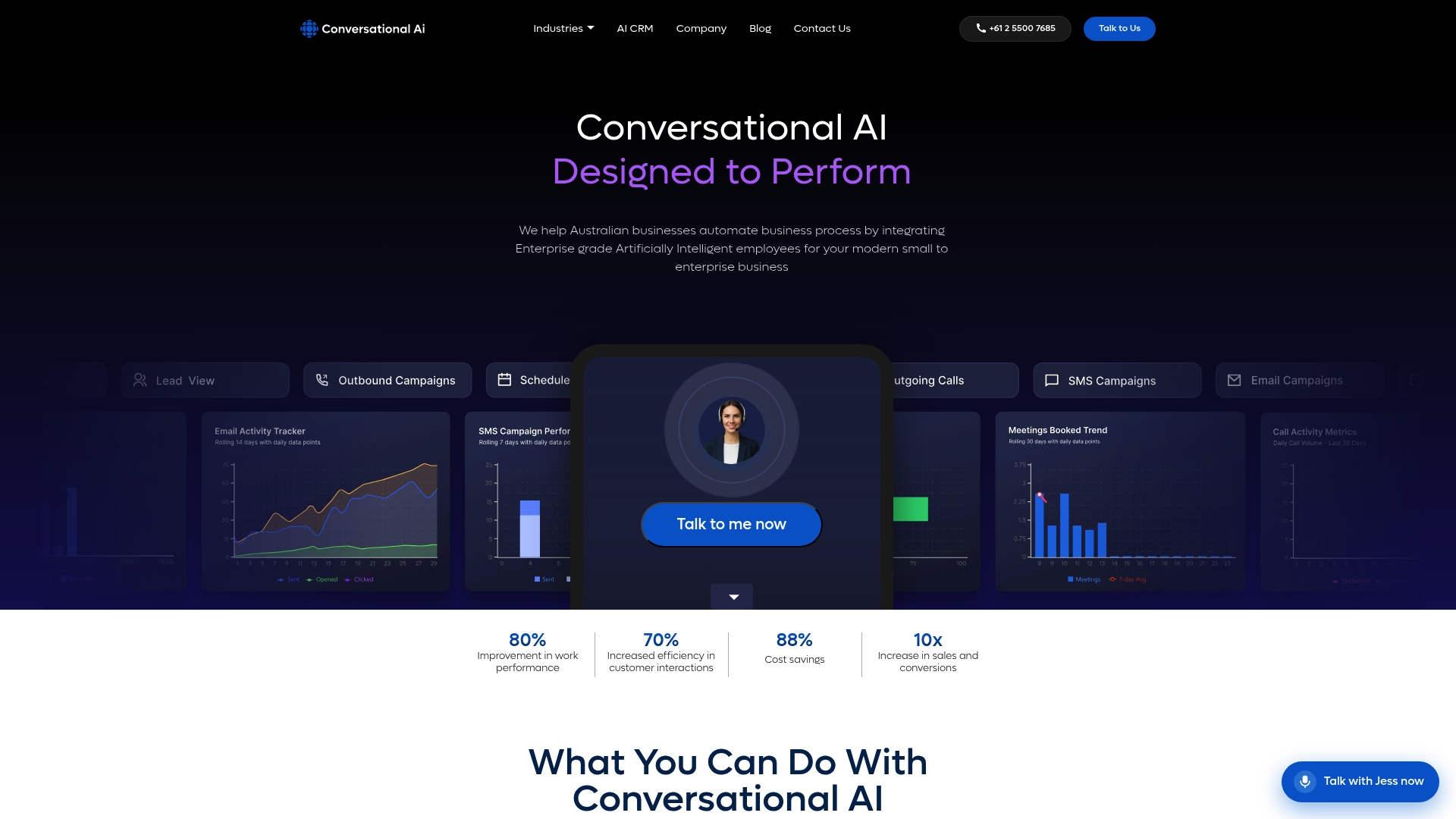
The platform offers voice, SMS, email and live chat agents that integrate with existing CRM systems and support features like contextual memory and dynamic agent training. If you’re weighing up whether to build that deployment layer in-house or hand it to a platform already built for regulated Australian sectors, book a look at Conversational AI’s platform and talk through what an enterprise rollout would take for your team.
Where to go deeper on agent pipeline design
- AgentOhana: the unified trajectory format and dataloader design referenced throughout this guide.
- FLUX: line-level excision algorithms and deduplication trade-offs.
- Kubeflow Pipelines and Metaflow: orchestration implementation docs.
- AgentSynth: working code for execution-based validation.
Sources
- AgentOhana: Design unified data and training pipeline for effective agent learning
- Kubeflow Pipelines concepts
- Metaflow basics
- AgentSynth (execution-based validation examples)