Voice AI in Australia: a practical guide for leaders
Explore how leaders in Australia can effectively implement voice AI. Ensure compliance and enhance customer experience with tailored solutions.

Yes, pilot voice AI now. Pick one high-volume, transactional call type, run a several-week, in-country proof of concept, and measure containment rate against your current average handle time. That single step will tell you more than any vendor demo.
Two reasons to move quickly:
- Data sovereignty is a live compliance issue. Australian privacy law requires careful handling of call recordings and transcriptions. An Australia-hosted platform keeps audio and data onshore from day one, removing the cross-border data-transfer risk before it becomes a board-level problem.
- Accent performance is a real differentiator. Global voice models frequently stumble on Australian English, regional accents, and everyday expressions. A model trained on Australian speech data reduces caller friction and improves first-call resolution from the start.
Your immediate next step: book a scoped trial with an Australia-hosted provider. Conversational AI (conversationalai.com.au) offers enterprise voice, SMS, and email agents hosted entirely in Australia, with CRM integration and a structured pilot pathway.
Key takeaways
Australian businesses should pilot voice AI now, starting with one high-volume transactional call type hosted in-country, and measure containment rate and average handle time against a pre-pilot baseline before committing to full deployment.
| Point | Details |
|---|---|
| Start with one call type | Pick a high-volume, simple transactional flow and run a several-week in-country pilot before expanding. |
| Data sovereignty is non-negotiable | Confirm in writing that audio, transcriptions, and logs are stored in Australian data centres. |
| Accent training requires both layers | Effective Australian-accent performance needs both STT/TTS tuning and language-model fine-tuning on local data. |
| Regional hosting reduces latency | In-country routing has been reported to cut turn latency by approximately 39%, improving conversation naturalness. |
| Conversational AI offers an in-country trial | The platform is Australia-hosted, CRM-integrated, and supports a structured pilot pathway across voice, SMS, and email. |
Table of Contents
- What is voice AI in Australia, and why are businesses adopting it now?
- Where does voice AI already deliver value for Australian businesses?
- How to run a practical 4-step voice AI pilot in Australia
- Australia-specific checkboxes to clear before you pilot
- What does voice AI cost, and how long does a pilot take?
- What questions should you ask when choosing a voice AI provider in Australia?
- Why Australia-first training and local hosting genuinely matter
- How to measure your pilot: KPIs and go/no-go criteria
- Common questions and misconceptions we hear from Australian customers
- Conversational AI: Australia-hosted voice agents, ready to pilot
- What we actually think about voice AI adoption in Australia
- Sources
What is voice AI in Australia, and why are businesses adopting it now?
Voice AI, in practical terms, is software that answers, conducts, or routes phone calls without a human agent. It listens to a caller, interprets their intent using natural language understanding, and responds in real time, either completing the task or handing off to a person when the situation calls for it.
Australian businesses are adopting it now for three converging reasons: labour costs are rising, call volumes are not shrinking, and the technology has matured enough to handle real-world accents and workflows reliably.
The core business benefits break down like this:
- Call deflection. Routine inbound calls, appointment confirmations, and balance enquiries can be handled without a live agent, freeing your team for complex work.
- Consistent service quality. An AI agent follows the same script, tone, and compliance protocol on every call, at 2 AM on a public holiday as reliably as at 9 AM on a Monday.
- Cost shapes that suit different scales. Pricing typically runs per minute of conversation, per agent-minute of platform execution, or as a monthly subscription with usage bands. Each model suits a different call volume profile.
Pro Tip: The fastest ROI almost always comes from high-frequency, simple call types: appointment reminders, booking confirmations, payment reminders, and after-hours triage. Start there, not with complex sales or complaints flows.
Relevant standards and frameworks to know: the Australian Privacy Act 1988 governs how call recordings and transcriptions are stored; the Do Not Call Register (DNCR) applies to outbound AI calling; and conversational AI techniques such as intent classification, slot-filling, and dialogue management underpin how these systems actually work.
Where does voice AI already deliver value for Australian businesses?
The most common categories in Australian deployments are inbound call handling, appointment management, lead qualification, collections and payment reminders, and outbound informational campaigns. Each maps to a different operational pain point, and each has a different complexity profile.
Inbound reception and triage is the most common entry point. A medical centre with phones ringing off the hook during flu season can route appointment bookings, prescription renewal requests, and after-hours enquiries without a receptionist touching every call. The AI handles the transactional layer; clinical staff handle the clinical layer.
Trades and property management businesses use voice agents for job booking and technician dispatch confirmation. A plumbing company running 200 inbound calls a week can automate the booking confirmation and parts-availability check, cutting average handle time significantly and reducing missed calls outside business hours. Platforms that integrate with tools like ServiceM8 or Xero make this straightforward.
Collections and payment reminders in financial services and utilities represent a high-value use case. An outbound AI agent can call a list of overdue accounts, confirm payment intent, and offer a payment link via SMS, all within a compliant, scripted flow that logs every interaction.
The call types best suited to a first pilot share a common profile:
- High volume (hundreds of calls per week minimum)
- Predictable intent (the caller almost always wants one of three or four things)
- Low emotional complexity (not complaints, not crisis support)
- Clear success metric (booking confirmed, payment initiated, appointment rescheduled)
Complex conversations, complaints, and anything requiring clinical or legal judgement belong with human agents. The AI handles the predictable volume so your people can focus on the calls that genuinely need them.
How to run a practical 4-step voice AI pilot in Australia
A well-scoped pilot typically takes several weeks and requires minimal disruption to existing operations. The goal is a measurable proof of concept, not a full deployment.
-
Pick your target call type and define success criteria. Choose one call category with clear volume data. Set three KPIs before you start: containment rate (calls resolved without human transfer), average handle time, and caller satisfaction score. Write these down and share them with your vendor before configuration begins.
-
Prepare your data and integrations. Map the CRM fields the agent needs to read and write. If the pilot involves appointment booking, confirm API access to your scheduling system (Cliniko, HotDoc, or your practice management software). For collections, confirm integration with your billing platform. Incomplete integrations are the most common cause of pilot delays.
-
Choose your hosting and set your privacy baseline. Confirm that audio recordings, transcriptions, and call logs will be processed and stored in Australia. Review the vendor’s data-retention policy, redaction options for sensitive data (Medicare numbers, payment details), and their security certifications. This step is non-negotiable for regulated sectors.
-
Run the live cohort, measure, and refine. Route a defined subset of real calls through the AI agent, typically 20–30% of the target call type. Review KPIs weekly. Identify the top three failure modes (misrecognition, unexpected intents, integration gaps) and address them before expanding volume. After 4–6 weeks, you have real data to support a go/no-go decision.
A compact pilot readiness checklist before you go live:
- Call recording consent language updated in IVR or pre-call message
- CRM integration tested end-to-end with sample records
- Escalation path to live agent confirmed and tested
- Fallback handling for unrecognised intents defined
- Pilot KPI dashboard set up and accessible to your operations lead
For after-hours call handling, a pilot is particularly low-risk: the AI handles calls your team cannot answer anyway, so there is no displacement of existing service.
Australia-specific checkboxes to clear before you pilot
Getting these right before you start saves significant rework later.
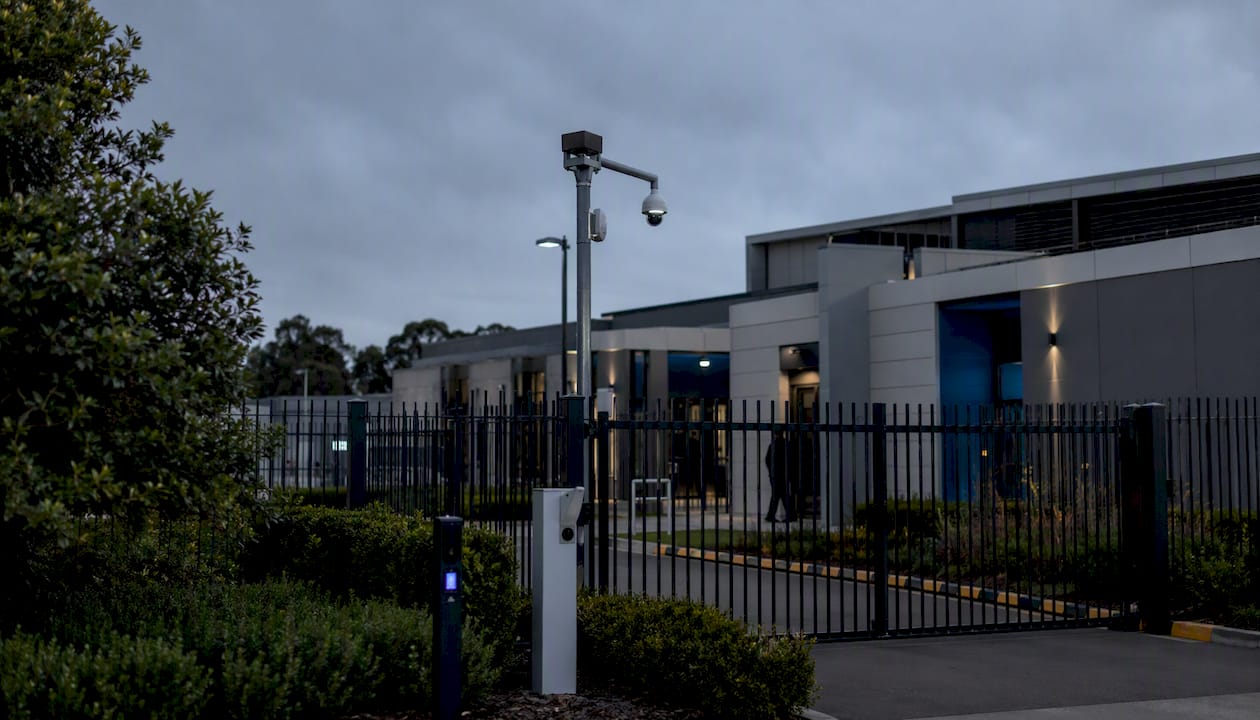
Data sovereignty and hosting. Audio files, transcriptions, and call metadata must be stored in Australian data centres if your organisation is subject to the Privacy Act or sector-specific rules (AHPRA, APRA, or state health legislation). Confirm the vendor’s hosting region in writing, not just in marketing copy.
Accent and language coverage. Require evidence of Australian-accent training. Effective accent handling requires both speech-model tuning and language-model fine-tuning according to Australian technical assessments; a global LLM without local grounding will mishandle expressions like “arvo,” “rego,” or “arvo appointment” in ways that frustrate callers and inflate transfer rates. Ask vendors for word-error rate data on Australian English specifically.
Telecom and compliance. For outbound AI calling, operators must comply with the Do Not Call Register and observe calling-hours and caller-ID rules. List washing against the DNCR before any outbound campaign is an operational requirement, not optional. Calling hours under the Telecommunications (Telemarketing and Research Calls) Industry Standard apply regardless of whether the caller is human or AI.
Integration checklist. Confirm SIP trunk or cloud PBX compatibility (most Australian carriers support SIP; confirm with your provider). Check CRM connectors for the tools your team already uses: Xero, ServiceM8, Cliniko, LEAP, Salesforce, or HubSpot. Confirm secure API key management and event logging for audit purposes.
Before running any synthetic test scripts, record a sample of 50–100 real calls from your own customer base and use those as your evaluation set. Real Australian callers use background noise, interrupted speech, and local idioms that synthetic scripts never capture. A vendor who performs well on your actual audio is far more likely to perform well in production.
Pro Tip: Ask your vendor for word-error rate results on a sample of your own call recordings before signing a contract. Any reputable provider will run this test. If they won’t, that tells you something important.
What does voice AI cost, and how long does a pilot take?
Cost drivers for an Australian deployment typically include:
- Platform licensing. Monthly or annual subscription covering the number of concurrent agents or channels.
- Per-minute STT/TTS and model costs. Speech-to-text and text-to-speech processing is usually billed per minute of audio. More capable models cost more per minute.
- Implementation and integration services. One-off setup, CRM integration, and voice design work. This varies widely by complexity.
- Phone carrier and SIP costs. Australian SIP trunking or cloud PBX fees, typically per-minute or per-channel.
- Monitoring and ongoing maintenance. Model retraining, prompt updates, and performance monitoring over time.
Common pricing shapes in the market:
| Pricing model | Typical structure | Best suited to |
|---|---|---|
| Per-minute (usage) | Billed per minute of AI-handled call | Variable or seasonal call volumes |
| Per-agent-minute (execution) | Billed per minute of agent runtime | High-volume, predictable workloads |
| Monthly subscription | Fixed fee with usage bands | Stable volumes, budget predictability |
| Implementation + licence | Upfront setup plus ongoing licence | Enterprise deployments with custom integrations |
Regional hosting in Australia can also reduce turn latency. A regionally routed execution layer has been reported to reduce turn latency significantly compared to routing through overseas infrastructure, which translates directly to more natural-sounding conversations and fewer caller drop-offs.
Timeline expectations:
- Pilot phase: 4–6 weeks from configuration to first live calls.
- Initial production: 3–6 months to stabilise, tune, and expand to additional call types.
- Enterprise roll-out: 6–12 months for multi-channel, multi-team deployment with full CRM integration.
The trade-off between cheaper global models and locally trained models is real. Global models cost less per minute but carry higher transfer rates on Australian accents, which erodes the cost saving. For high-volume enquiry handling, the performance gap matters more than the per-minute rate.
What questions should you ask when choosing a voice AI provider in Australia?
Vendor selection comes down to five areas. Use these as guidelines for your RFP framework.
Security and compliance:
- Where exactly are audio files, transcriptions, and call logs stored? Which data centres and which cloud region?
- What security certifications does the platform hold (ISO 27001, SOC 2 Type II, or equivalent)?
- What are the data-retention defaults, and can sensitive fields be redacted automatically?
Integration capabilities:
- Which CRM and practice management systems does the platform connect to natively?
- Does it support SIP trunking and the cloud PBX your business currently uses?
- How are API credentials and event logs managed for audit purposes?
Language and accent performance:
- What Australian speech datasets were used to train or fine-tune the models?
- Can the vendor provide word-error rate benchmarks on Australian English, including regional accents?
- Is language-model fine-tuning available for your specific domain vocabulary?
Operational SLAs and support:
- What is the contracted uptime SLA, and what are the remedies for downtime?
- Is support available during Australian business hours, and is there an onshore escalation path?
- How are model updates managed, and do they require re-testing before deployment?
Pilot terms:
- Can you run a time-limited, scoped pilot before committing to a full contract?
- What does the vendor provide during the pilot (configuration support, KPI reporting, tuning)?
- What are the exit terms if the pilot does not meet agreed acceptance criteria?
Market reviews of voice AI platforms highlight trade-offs across voice quality, developer control, and custom pipeline support. Frame your procurement questions around these categories rather than brand names, and weight them according to your organisation’s priorities. For a regulated sector, data sovereignty and SLA terms will outweigh raw voice quality scores. For a high-volume contact centre, per-minute cost and containment rate matter most.
Why Australia-first training and local hosting genuinely matter
The performance gap between a globally trained model and an Australia-first model is not a marketing claim. Research confirms that models trained on Australian speech datasets reduce caller friction and improve comprehension of regional accents and colloquialisms. The practical effects show up in three measurable ways:
- Lower call abandonment rates, because callers are not repeating themselves or waiting for the agent to catch up.
- Higher first-call resolution, because the agent correctly interprets intent on the first attempt.
- Fewer transfers to human agents, because the AI handles the full transaction rather than failing mid-flow.
Accent and idiom handling requires both STT/TTS tuning and language-model fine-tuning. A model that handles phonetics well but lacks grounding in Australian usage patterns will still fail when a caller says “I need to sort out my rego” or asks about an “arvo appointment.” Both layers need local training.
On the hosting side, regional compute reduces turn latency materially, with one reported figure of approximately 39% less latency for regionally routed calls. Lower latency means more natural conversation pacing, which directly affects caller experience and completion rates.
Conversational AI addresses these requirements directly. The platform is hosted entirely within Australia, uses Australian-accent-trained voice models, and supports multi-channel agents across voice, SMS, email, and live chat. CRM integrations cover the tools Australian businesses actually use, and the platform’s private cloud architecture supports the data-residency requirements of healthcare, finance, and professional services organisations. Explore the platform’s agent capabilities to see how these features apply to your specific call types.
Statistic to note: A regionally hosted execution layer reported approximately 39% less turn latency compared to overseas routing, with per-call logging of region, provider, and model for full auditability.
How to measure your pilot: KPIs and go/no-go criteria
A pilot without defined acceptance criteria is just an experiment. Set these KPIs before the first live call.
Core pilot KPIs:
- Containment rate: percentage of calls fully resolved by the AI without human transfer. For simple booking flows, target above 60% as a baseline.
- Call completion rate: percentage of calls that reach a defined end state (booking confirmed, payment initiated, information delivered) rather than dropping or timing out.
- Transfer rate to human agent: for simple transactional tasks, a transfer rate below 10% indicates the agent is handling its intended scope. Higher rates signal intent-recognition gaps or integration failures.
- Average handle time: compare AI-handled calls against the pre-pilot human baseline for the same call type.
- NPS or CSAT lift: a short post-call SMS survey (one question, 30-second response) gives you caller sentiment data without significant overhead.
- Word-error rate / misrecognition rate: track how often the agent asks for clarification or misroutes due to speech recognition failure. Speech and HCI research supports using stratified word-error rates by accent group as an objective quality measure.
Example target ranges (illustrative, not guaranteed): Appointment booking flows: containment above 60%, transfer rate below 10%. Payment reminder outbound: completion rate above 50%, opt-out rate within DNCR-compliant thresholds.
Go/no-go checklist for production readiness:
- Containment rate meets or exceeds the agreed threshold for the target call type
- Integration with CRM and scheduling system is stable (no data-sync failures over the final two weeks of pilot)
- No unresolved compliance gaps (consent language, DNCR compliance, data-residency confirmation)
- Escalation path to human agent tested and functioning under load
- Measurable ROI case documented (cost per call AI vs. human, volume handled)
Common questions and misconceptions we hear from Australian customers
“We’re worried about where our call data ends up.” This is the right question to ask, and it should be the first one on your vendor checklist. Not all platforms that market themselves as “Australian” actually process and store audio in Australia. Require written confirmation of the specific data centre region, not just a reference to “local infrastructure.” For healthcare and financial services organisations, this is a contractual requirement, not a preference.
“Will it actually understand our customers?” Accent performance varies significantly between platforms. A global model trained primarily on American or British English will mishandle Australian colloquialisms and regional accents at a rate that makes it unsuitable for production use. The fix is not a better prompt; it is a model trained or fine-tuned on Australian speech data. Ask for evidence before the pilot, not after.
“Is it going to cost more than it saves?” The cost case depends almost entirely on call volume and call type. For organisations handling hundreds of routine calls per week, the economics are straightforward. For lower volumes or complex call types, the ROI timeline is longer. A scoped pilot with defined KPIs answers this question with your own data, which is more reliable than any vendor projection.
Conversational AI’s typical engagement pattern runs: scoped trial on one call type, 4–6 week pilot with live calls and KPI reporting, then a production decision based on measured outcomes. That sequence keeps risk low and gives your team real evidence before any significant commitment.
One common implementation pitfall: teams underestimate the effort required to prepare CRM data before integration. Fields that are inconsistently populated, duplicate records, and missing contact numbers all surface during integration testing. Allocating two to three days of data-cleaning work before the pilot begins prevents the most common cause of delayed go-lives.
Conversational AI: Australia-hosted voice agents, ready to pilot
Australian businesses that need voice AI without the data-residency risk have a clear option. Conversational AI delivers enterprise-grade voice, SMS, email, and live chat agents hosted entirely within Australia, with CRM integrations for the tools your teams already use and a structured pilot pathway that gets you to live calls in weeks, not months.
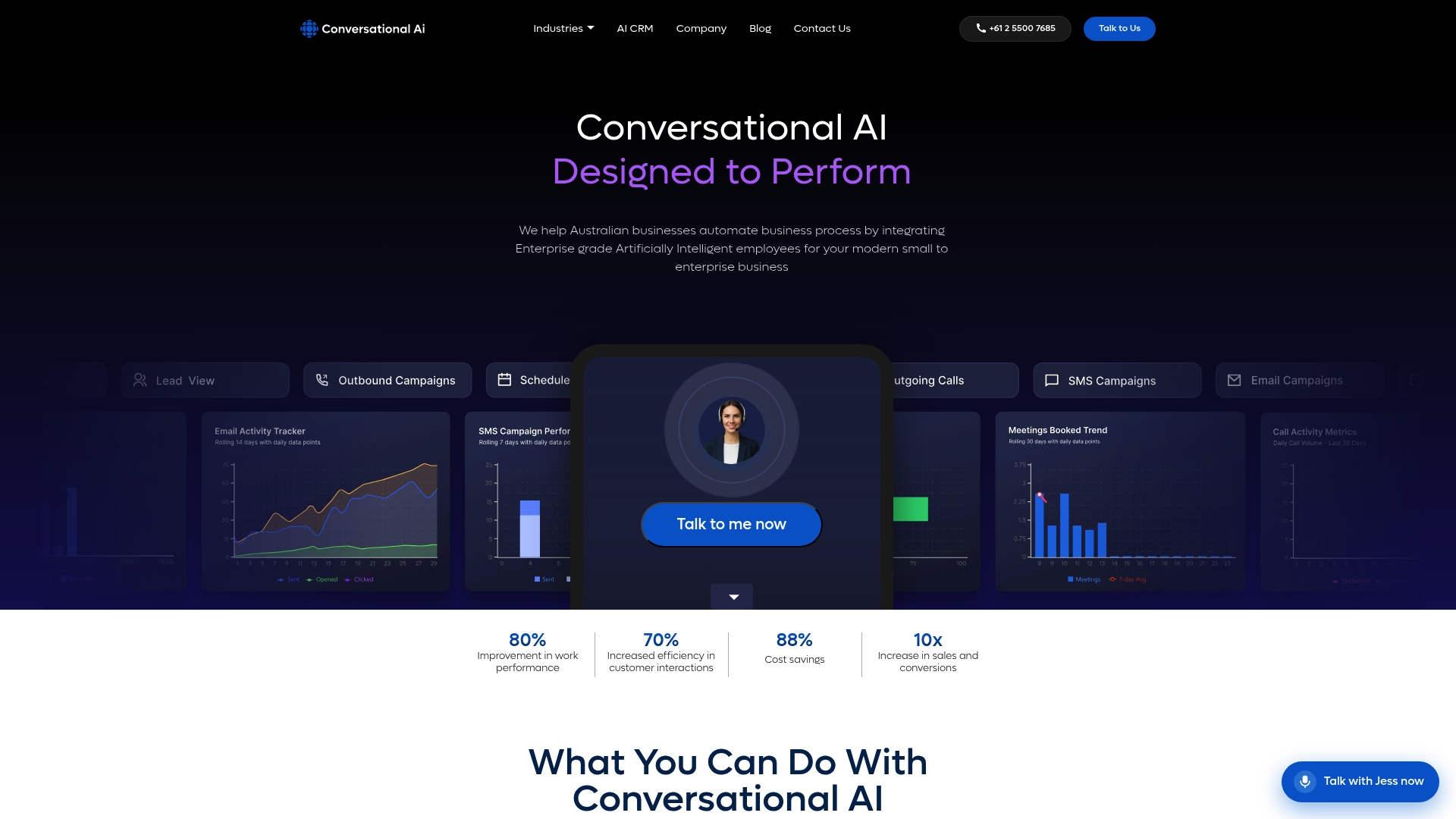
The platform’s private cloud architecture supports the compliance requirements of healthcare, finance, real estate, and professional services. Every call is processed and logged in-country, with configurable data-retention and redaction options. Multi-channel voice, SMS, and email automation means your pilot can expand beyond voice without switching platforms.
To start a scoped trial, visit Conversationalai and request a demo. Bring your target call type, your current call volume, and your three pilot KPIs. The team will scope a proof of concept around your actual workflows.
What we actually think about voice AI adoption in Australia
The conversation about voice AI in Australia tends to get stuck in two places: organisations that are waiting for the technology to be “perfect,” and vendors promising it already is. Neither position is useful.
The honest picture is that voice AI works well right now for a specific, bounded set of tasks. Appointment reminders, booking confirmations, payment nudges, after-hours triage. These are not glamorous use cases, but they represent tens of thousands of calls per week across Australian healthcare, trades, and financial services businesses. Automating them reliably, in-country, with an agent that understands how Australians actually speak, is a genuine operational improvement.
What gets underestimated is the accent and idiom problem. Most decision makers assume it is a minor polish issue. It is not. A model that cannot parse “I need to reschedule my arvo appointment” or misroutes a caller who says “I’m ringing about my rego” is not a minor inconvenience; it is a failed call that damages your brand. The fix requires local training data and language-model fine-tuning, not just a better prompt. Vendors who cannot demonstrate this with your own audio samples before the pilot are not ready for Australian production use.

The other underestimated factor is data residency. Many organisations assume that because a vendor has an Australian sales team or an Australian website, the data stays in Australia. It often does not. Audio processing, transcription, and model inference can all route through overseas infrastructure without the customer realising it. For any organisation in healthcare, finance, or professional services, this is a material compliance risk. Confirm it in writing, in the contract, before you sign anything.
The organisations getting the most value from voice AI right now are not the ones who ran the biggest pilots. They are the ones who scoped tightly, measured honestly, and expanded only what worked.
Sources
- AI systems are built on English — but not the kind most of the world speaks
- Australia’s large language model landscape: technical assessment
- SLNG // Sovereign Voice Hub | Sydney, Australia - Unmuted.
Recommended
- Best Voxworks.ai alternatives for Australian businesses - Conversational AI
- AI automation for Australian businesses explained - Conversational AI
- What is outbound voice automation? A guide for professionals - Conversational AI
- How AI integrates with legacy systems: Australian enterprise guide - Conversational AI