Secure Messaging in Australian Healthcare: A Practical Guide
How secure messaging works in Australian healthcare, what to check before choosing a service, and where patient-facing channels like SMS and chat fit safely.

Secure messaging is the encrypted, point-to-point exchange of clinical information between healthcare providers in Australia. It replaces fax, post and ordinary email for referrals, specialist reports, results and discharge summaries. It works through your clinical software and a registered secure messaging provider, and it leaves an audit trail of delivery. This guide explains how it works, what to check before you choose a service, and how to keep the other messages your practice sends, such as patient SMS and chat, equally defensible.
TL;DR
- Secure messaging moves clinical documents between providers in encrypted form, straight into the receiver’s clinical system, with confirmation of receipt.
- To use it, you need a conformant clinical information system and registration with at least one secure messaging provider.
- Check compatibility with your software, training, fees and your internet reliability before you commit.
- Secure messaging covers provider-to-provider traffic. Patient-facing SMS, chat, email and voice need their own privacy controls and onshore data handling.
- We build that second layer: Australian-hosted AI agents for patient communication, kept separate from your clinical exchange.
Table of Contents
- What secure messaging means in Australian healthcare
- How a secure message actually travels
- Secure messaging compared with fax, post and email
- What you need to get started
- Standards and interoperability behind the scenes
- Where secure messaging stops and patient communication starts
- Our perspective
- How our platform supports the patient-facing side
- A sensible rollout plan
- FAQ
- Sources
What secure messaging means in Australian healthcare
The Australian Digital Health Agency describes secure messaging as a digital health service for sharing clinical documents and other information between healthcare providers. In practice that means referrals, specialist reports, pathology and radiology results, hospital discharge summaries and allied health reports.
The Agency also treats it as a core foundational capability for interoperability. It is not a nice-to-have add-on. It is the plumbing that lets a GP, a specialist, a hospital and an allied health provider hand information to each other without paper.
One distinction matters. The Agency separates secure messaging, a point-to-point exchange, from the point-to-many model used by records like My Health Record. A secure message goes from one named sender to one named receiver. A shared record sits in one place and is viewed by many authorised people. Most practices use both, for different jobs.

How a secure message actually travels
The flow is simple once you see it, and each step is a safeguard:
- The sender’s system encrypts the message.
- The receiver’s secure messaging provider decrypts it.
- That provider passes it to the receiver’s clinical information system.
- The receiving system routes it to the intended practitioner or service.
- The sender is alerted that it arrived.
This sequence is set out by the Agency, and the last step is the one clinics notice most. With fax, you assume delivery. With secure messaging, you have a record of it. A primary health network describes the same benefit as send and receive audit trails, alongside lower stationery, postage and staff-time costs.
Why ordinary email falls short
The Agency lists the risks plainly. Unencrypted email can be sent to the wrong recipient, read on a lost or stolen portable device, forwarded or altered without the sender’s knowledge, or intercepted. None of these is exotic. Each one happens in busy practices every week, usually through a mistyped address or a shared device.
A secure messaging service closes those gaps because the destination is a verified provider in a directory, not a free-text address.
Secure messaging compared with fax, post and email
| Feature | Fax | Post | Standard email | Secure messaging |
|---|---|---|---|---|
| Encrypted in transit | No | Not applicable | Often not | Yes |
| Confirmation of delivery | Weak | Weak | Weak | Audit trail of delivery |
| Lands in clinical software | No, needs scanning | No, needs scanning | No, needs saving | Yes, integrated |
| Re-keying or transcribing | Usually | Usually | Often | Removed by integration |
| Risk of wrong recipient | High | Medium | High | Lower, directory-based |
The comparison follows the Agency’s own summary: against fax, post and standard email, secure messaging offers security, privacy and auditability, faster exchange and fewer paper-based processes. The same page says it gives a single channel for correspondence that is integrated into clinical software.
For a practice manager, the saving that shows up first is time. A discharge summary that arrives inside the patient record does not need someone to open an envelope, scan it, name the file and attach it.
What you need to get started
According to the Agency, a practice needs two things: a conformant clinical information system, and registration with one or more secure messaging providers. Then you work through a short list of checks.
A checklist before you choose a provider
- Compatibility. Confirm the service works with your existing clinical software, not just a version your vendor plans to support.
- Training. Ask what onboarding and ongoing support the provider offers for reception and clinical staff.
- Fees and charges. Get the full cost in writing, including any per-message or per-user charges.
- Connectivity. The Agency’s guidance is for reliable internet, ideally an unlimited data plan with mobile backup.
- Reach. Check that the providers you refer to most often can receive messages from your chosen service.
- Directory access. Confirm you can search for other providers and find the correct recipient.
The last two points are where practices get caught. A service that is technically excellent but cannot reach your top ten referrers is a service that still leaves you faxing.
Who in your team should own it
Secure messaging touches reception, clinicians and whoever manages your IT. Name one owner. That person tests the setup, checks that incoming messages are being routed to the right inbox, and handles the provider relationship. Without an owner, messages sit unread in a shared queue, which is the same failure as a fax tray that nobody empties.
Training matters more than most clinics expect. Large national digital rollouts, such as the UK’s NHS adult screening digital contract, show how much weight health systems put on technology and people moving together. At practice scale, that translates into a short, scheduled training session for every staff member who touches referrals.
Standards and interoperability behind the scenes
You do not need to read the technical documents to use secure messaging, but it helps to know they exist, especially if you evaluate vendors or run IT.
The Agency and industry partners are developing the National Secure Messaging Network (NSMN). Its Blueprint describes the network roles, the Interoperability Specification sets out the technical requirements, and the Conformance Assessment Scheme explains how participants show they meet the required standards. Provider directories support searching for healthcare providers.
The NSMN Conformance Profile defines requirements for four system types: Client System, End Node, Core Node and Provider Directory. The aim is that every participant communicates consistently.
Older still is the Australian Standard for e-health secure message delivery, AS 5552-2013, which defines role specifications and service interfaces to ensure interconnectivity, privacy and assurance of delivery over the internet.
What does this mean for a buyer? Ask a vendor which of these roles it fills and how it demonstrates conformance. A clear answer is a good sign. A vague one is a reason to keep looking.
Structured data is the next step
The Agency points to structured data, such as pathology results and medications, as a way to enrich exchanges between systems and streamline interoperability. A PDF is readable. Structured data is usable: it can populate fields, trigger alerts and avoid manual entry.
The same document acknowledges a history of inconsistent implementation across the country, which contributed to information exchange problems for clinicians. That is why checking that your provider can reach others matters as much as the features list.
Where secure messaging stops and patient communication starts
Secure messaging is built for provider-to-provider traffic. It does not book a patient’s appointment, remind them about a fasting requirement, or answer the phone at 8:05 am on a Monday.
Those are different channels with different risks:
- SMS reminders and recalls, where consent and sender identity matter. Our guide to SMS consent management in Australia covers opt-in templates.
- Live chat and web forms, where patients type symptoms or personal details into a box.
- Voice, where callers share identifiers and health details out loud.
- Email, where the same wrong-recipient risks described above apply.
Each of these handles personal and often sensitive health information. The same discipline you apply to a referral applies here: know where the data goes, who can see it, and where it is stored. Our checklist on vendor checks for hosting health data in Australia is a good place to start, and our piece on controls for compliant healthcare chatbots goes through the safeguards in more detail.
It also helps to keep the two worlds distinct in your policies. Clinical documents go through secure messaging. Administrative conversations with patients go through a patient communication platform with its own controls. Mixing them, for example by emailing a pathology result because the patient asked, is where practices get into trouble.
Our perspective
We do not provide clinical secure messaging, and we would not suggest replacing it. That job has an established national framework, and your clinical software vendor and secure messaging provider are the right partners for it.
What we see in clinics is the gap on the other side. A practice invests in secure messaging for referrals and then runs its patient-facing communication on tools that store data offshore, with no clear audit trail and no clear escalation path. The front desk is buried in calls, so someone adopts a quick workaround.

We built our platform for that second problem. It runs voice, SMS, email and live chat agents hosted entirely in Australia, integrates with existing CRM systems, and keeps data under your control. It is SOC 2 certified. For healthcare, we think the right design principles are the same ones that make secure messaging work: encryption, traceability, a clear owner, and defined escalation to a human when a conversation needs clinical judgement.
That last point is non-negotiable for us. An AI agent handles bookings, reminders, waitlist follow-ups and common questions. It triages and escalates anything that sounds clinical, using your protocol. It does not diagnose.
— Sowrabh
How our platform supports the patient-facing side
If your clinic or health group wants to automate appointment booking, reminders and enquiries without sending patient data offshore, our Conversational AI for Healthcare offering is built for exactly that. It covers voice, SMS, email and chat agents with contextual memory, automated follow-ups and real-time reporting, all hosted in Australia.
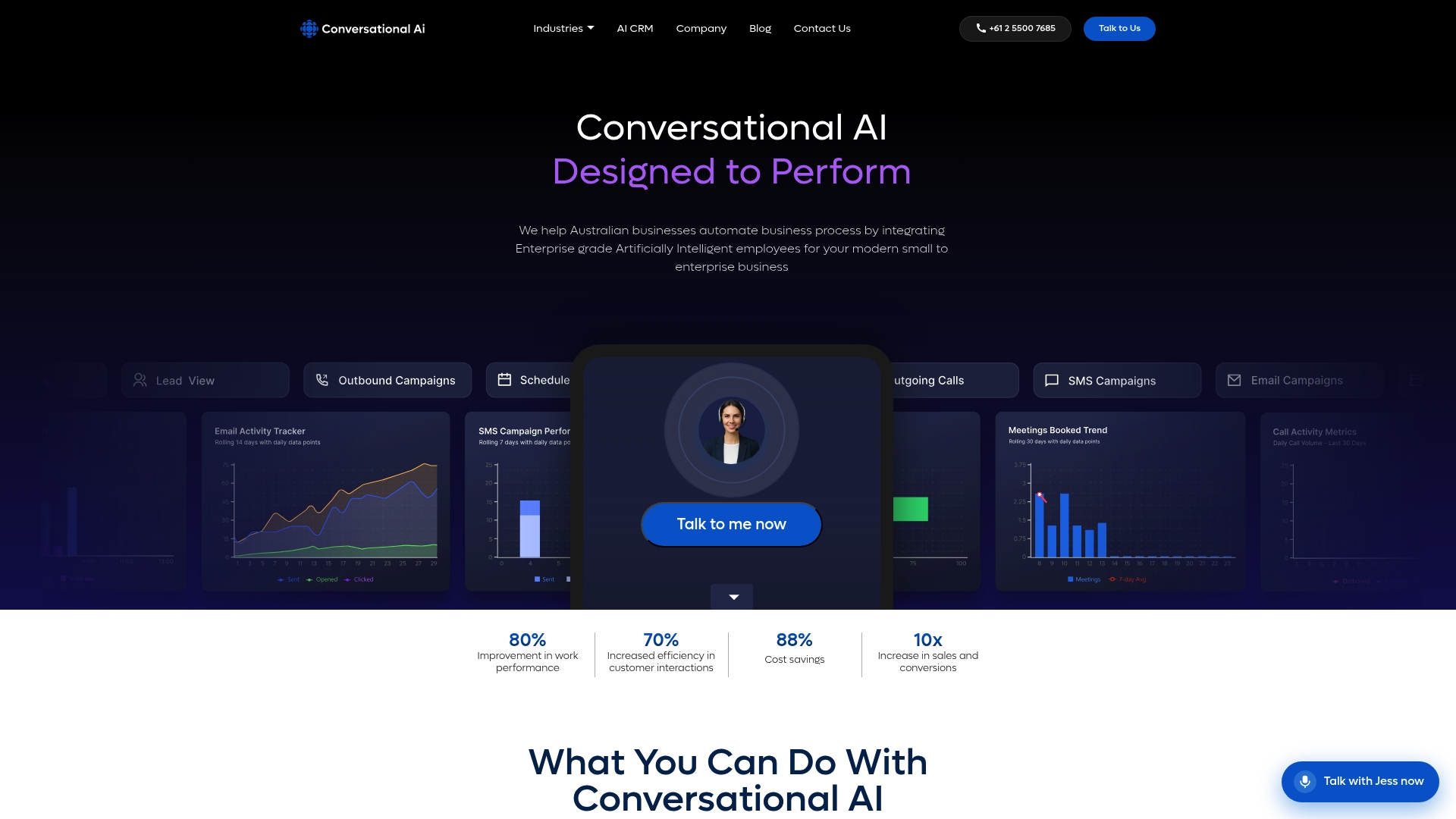
For larger organisations with strict residency requirements, we also offer on-premises deployment. If waitlists are your pressure point, our patient waitlist automation guide shows how a practical rollout works.
A sensible rollout plan
Whether you are adding secure messaging or tightening patient communication, the same sequence works.
- Map your traffic. List every type of message that leaves your organisation, who sends it and by what channel.
- Sort by sensitivity. Clinical documents belong in secure messaging. Administrative messages need consent, encryption and onshore handling.
- Choose providers against the checklist above: compatibility, training, fees, reach and connectivity.
- Name an owner for each channel.
- Train every user, including locums and new reception staff.
- Review quarterly. Check undelivered messages, unread queues and any staff workarounds.
Step 6 is where you catch the quiet failures, like a referral that went to an inbox nobody checks.
FAQ
Is secure messaging the same as email?
No. Standard email can be misaddressed, intercepted or forwarded without the sender’s knowledge. Secure messaging encrypts the message, delivers it to a verified provider’s clinical system and confirms receipt to the sender.
What can I send through secure messaging?
The Agency lists referrals, specialist reports, pathology and radiology results, hospital discharge summaries and allied health reports. It is for clinical information shared between healthcare providers, not for general patient conversations.
What do I need to start using it?
You need a conformant clinical information system and registration with at least one secure messaging provider. Also check fees, training and your internet reliability. Your clinical software vendor can tell you which providers work with your system.
Can I use SMS or chat to talk to patients securely?
Yes, with the right controls: documented patient consent, encryption, clear data residency and escalation to a human for clinical issues. Keep clinical documents in secure messaging and use patient channels for administrative communication such as bookings and reminders.
Sources
- Secure messaging, Australian Digital Health Agency
- Safety and Quality Benefits of Secure Messaging, Australian Digital Health Agency (2020)
- Secure Messaging, Digital Health Implementer Hub
- National Secure Messaging Network Conformance Profile
- E-health secure message delivery v2013, Digital Health Implementer Hub
- Secure messaging, EMPHN
- NHS adult screening digital contract